


- Obligation-Free Consultation
- No Win, No Fee
- Award-Winning Lawyers
As Featured In:






















Check Out Our Awesome Reviews Below:
EXCELLENTTrustindex verifies that the original source of the review is Google. I cannot thank the team at HD Claims enough for their help with my personal injury claim. From day one, their injury lawyers were incredibly professional, explaining the no win no fee process clearly without complex jargon. They took away all the stress of dealing with the insurance companies and secured the accident compensation I was entitled to. If you are looking for reliable personal injury solicitors who truly look out for your best interests, I highly recommend their services.Posted on GoogleTrustindex verifies that the original source of the review is Google. HD Claims made my personal injury claim simple and stress-free. The team was professional, responsive, and kept me updated throughout the process. I would recommend them to anyone needing help with an accident compensation claimPosted on GoogleTrustindex verifies that the original source of the review is Google. I was involved in a car accident where my car was written off and my passengers were seriously injured. I contacted HD Claims and received an excellent service from start to finish. They were very understanding and took the time to explain the whole process clearly. In the end, I received a very favourable settlement. I would most definitely recommend this firm to anyone in a similar situation.Posted on GoogleTrustindex verifies that the original source of the review is Google. Excellent service from HD Claims! They completely managed my personal injury claim from start to finish and allocated me a fantastic specialist solicitor. The whole process was handled on a 'no win no fee' basis, making it entirely stress-free. Their communication was top-notch, and I am very happy with the final settlement I received. I highly recommend their team to anyone looking for reliable legal support.Posted on GoogleTrustindex verifies that the original source of the review is Google. HD Claims were brilliant after my accident. They handled everything smoothly and kept me informed the whole time. If you need personal injury lawyers with car accident experience, they’re a great choice.Posted on GoogleTrustindex verifies that the original source of the review is Google. I've used HD Claims for a few car accidents I've suffered over the years as a taxi driver. Always received a great experience and compensation - Asif Khan GlasgowPosted on GoogleTrustindex verifies that the original source of the review is Google. Hey my name is Andrei and I’m with John white my self and they are They are the best 100% in all Scotland you should try with them. They’re the best service and they provide with everything. What you want to know about and I give them out 10 out of 10.Posted on GoogleTrustindex verifies that the original source of the review is Google. Was a very good service 👏Posted on GoogleTrustindex verifies that the original source of the review is Google. I had a great experience with HD Claims. The injury lawyers were professional, responsive, and explained everything clearly. They handled my case with care and confidence, making the whole process stress-free. Highly recommended for injury claims.Posted on GoogleTrustindex verifies that the original source of the review is Google. My insurance company recommended a firm that charged 30% and had poor reviews. I went with Hamilton Douglas instead, who charged far less and were completely transparent. They were professional, communicative, and secured me an excellent settlement. Do your research and pick them.Verified by TrustindexTrustindex verified badge is the Universal Symbol of Trust. Only the greatest companies can get the verified badge who has a review score above 4.5, based on customer reviews over the past 12 months. Read more
When laser resurfacing goes wrong, it can leave you with burns, scarring, or changes in skin colour. A treatment that was meant to improve fine lines, acne scars, or overall skin texture can instead leave you dealing with pain, distress, and damaged skin that takes weeks or months to settle.
Problems can arise after many types of laser treatment, including ablative laser resurfacing and procedures using carbon dioxide (CO2) lasers. In some cases, the settings may not be properly adjusted for your specific skin profile on the Fitzpatrick Skin Phototype scale, leading to severe thermal damage.
In others, the laser may be applied for too long, or aftercare advice may not be explained clearly. When that happens, the result can be more than a temporary reaction. Some people are left with infection, delayed healing, or symptoms that become long-term rather than short-lived side effects.
We understand that these cases are not only about appearance. They can also involve pain, recovery, time away from work, and the distress of realising that a cosmetic procedure may have caused avoidable harm.
Seeking expert advice for a personal injury claim in Scotland? At HD Claims, we manage the legal strategy of your case from start to finish. We work with expert personal injury solicitors in Scotland whose experience suits the nature and complexity of your claim. This means you can feel confident that your case is in capable hands from the outset.
Where appropriate, claims can be pursued under a Speculative Fee Agreement, so you can find out where you stand without paying legal fees upfront.
Speak to our compensation experts
It doesn't cost you anything to know where you stand.
Fill out the form, and we'll get back to you within one hour.
Need to speak to us sooner?
Call us on 0141 280 1112
- Over £3+ Million in Settlements
- No Win, No Fee
- Supporting Scots Since 2010
- 10 Offices Around Scotland
Request a FREE call
When does laser skin resurfacing surgery become a medical negligence claim?
A laser skin resurfacing claim does not arise just because the result was disappointing. It becomes a medical negligence claim when the practitioner breaches their duty of care, and that failure causes avoidable harm.
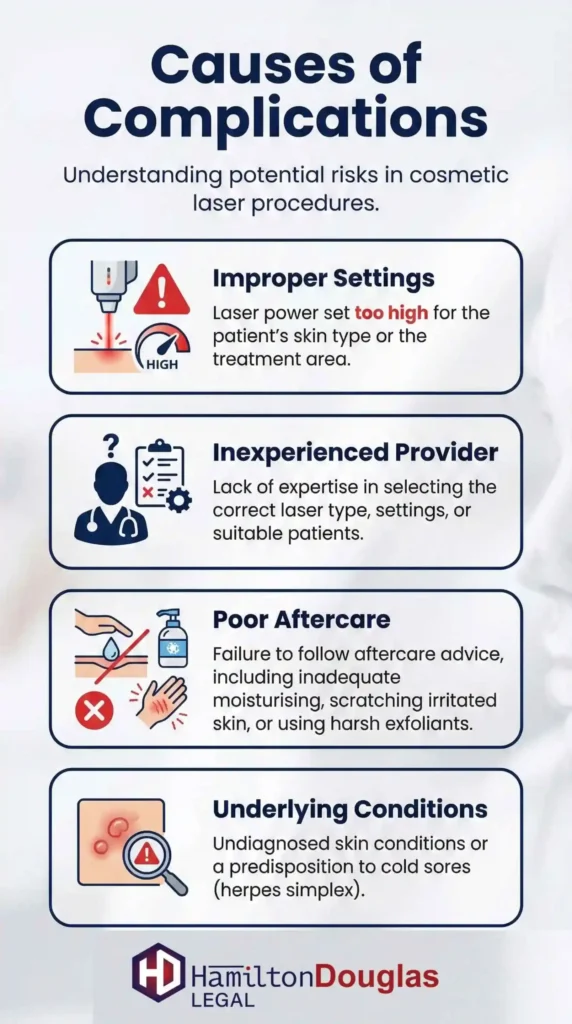
That can happen when the laser settings are too strong for your skin, when the beam is left on the same area for fractionally too long, or when treatment goes ahead despite clear contraindications. For example, a clinic may fail to take proper account of psoriasis, pregnancy, diabetes, active skin irritation, or a tendency to develop raised scars. In cases like these, the outcome may point to poor clinical judgment rather than simple misfortune.
This usually means the treatment was not planned or carried out safely. A procedure meant to treat wrinkles, acne scarring, or sun damage may instead damage the outer layer of skin, interfere with healing, and leave the patient with burns, scarring, infection, or lasting pigment change.
Whether the treatment involved fractional CO2 laser resurfacing, another resurfacing system, or even intense pulsed light used inappropriately. If the provider failed to take proper care before, during, or after the procedure, and you were left with a skin treatment injury or a burn injury from a cosmetic or beauty treatment, there may be grounds to claim.
- Note: By law, independent clinics providing cosmetic laser treatments must be registered with Healthcare Improvement Scotland (HIS) and adhere to strict statutory safety regulations. This includes appointing a certified Laser Protection Adviser (LPA), conducting mandatory laser safety risk assessments, and maintaining flawless Patient Care Records.
If a clinic was operating without the required registration, or failed to follow relevant safety requirements, that may provide useful supporting evidence when arguing that the standard of care fell below what was reasonably expected.
Skin Patch Tests and Client Assessment
A proper skin patch test is one of the clearest safeguards in laser resurfacing treatment. It should usually be carried out at least 48 hours before the first session so the practitioner can assess how your skin responds, choose a safe beam intensity, and decide how long the laser should be applied to the treated area.
Just as important is a full medical history assessment. The clinic should ask about skin conditions, medication, past scarring, recent sun exposure, infections, pregnancy, and anything else that could affect healing or make the procedure unsafe.
When those checks are skipped, rushed, or treated like a box-ticking exercise, the risk of injury rises sharply. A claim is often much stronger when the provider does not carry out a patch test, fails to hold a proper consultation, or overlooks clear warning signs before treatment begins.
What type of injuries can result from medical negligence in laser skin resurfacing procedures?
The injuries can range from short-term pain to permanent visible damage. Where the laser is too aggressive, used for too long, or applied without proper safeguards, the outer layer of skin can be badly injured.
Thermal Burns and Skin Damage
Thermal burns are among the most common problems. First and second-degree burns can destroy the epidermis, cause severe blistering, and leave raw, painful skin that takes far longer than expected to heal. If the area becomes infected, the injury can worsen, and healing may take much longer.
Pigment Changes
Pigmentation injuries are also common after negligent treatment. Some people are left with hyperpigmentation, where the skin becomes darker, while others develop hypopigmentation, where patches of skin become permanently lighter than the surrounding area.
Scarring
Scarring can be especially distressing on the face. Excessive heat or poor technique during fractional ablative treatment may trigger hypertrophic or keloid scars, leaving raised marks that are much harder to treat than the original problem.
Eye Injuries
There can also be eye injuries. If proper protective goggles were not provided during treatment near the eyes, there is a risk of retinal damage as well as lasting sensitivity and visual problems.
Importance of Training, Qualifications & Experience
When laser resurfacing is carried out by someone without the right training or experience, the consequences can be serious. These treatments are not routine beauty tasks. They involve powerful equipment that can burn the skin, trigger infection, and leave lasting scarring or pigment damage if it is used carelessly.
The type of setting does not decide whether you can make a claim. Treatment at a beauty salon, a laser clinic, or a private medical practice can all lead to a valid claim if the procedure is not carried out with proper care. What matters is whether the person performing the treatment used the equipment safely, assessed your suitability properly, and acted with reasonable care throughout.
Every practitioner owes that duty, whatever title they use. A laser technician, beautician, or clinician cannot avoid responsibility simply because the treatment was cosmetic rather than medical.
A lack of proper training often shows up in familiar ways. The machine settings may be wrong, warning signs may be missed, hygiene standards may fall short, or the practitioner may continue even when the skin is already reacting badly. Whether it is a salon mistake or a CO2 laser gone wrong in a clinic, the issue is the same: you should not be left with avoidable harm because the treatment was carried out by someone who was not competent to do it safely.
Making A Personal Injury Claim In Scotland
Our panel of experienced personal injury lawyers excel in handling cases against well-funded insurance companies.
Our specialised injury lawyers will assist you with your claim, keep you informed throughout the whole process, and provide you with legal advice that is easy to understand.
01
Get In Touch.
Tell us your story, we're here to listen and provide you with an initial assessment based on your circumstances.
02
We’ll Prepare Your Claim.
We'll be by your side to take care of the legal process. We'll keep you informed of every step of the way.
03
Receive Compensation.
If your claim is successful, we'll ensure that you get your compensation as soon as possible.

"A Student’s Journey from Trauma to Triumph: Efthymios’s Fight for Justice After a Devastating Car Accident"
When Efthymios was injured in a car accident, he was left with severe facial injuries. He didn’t know how he would manage his recovery and studies.
“When I got in contact with HD Legal, they made me feel supported. They were incredibly understanding and fought hard for me, ensuring I received the compensation I deserved.”

"Cracked Pavement, Broken Ankle: How HD Legal Helped Margaret Find Justice and Peace of Mind"
When Margaret tripped on a neglected crack in the pavement in Glasgow, she shattered her ankle and was forced to take months off work, unsure how she would manage.
“HD Legal were a lifeline for me. They took care of everything—from gathering crucial evidence to battling the council—and gave me the peace of mind I needed to focus on my recovery.”
"Blown Away: HD Legal Fights for Douglas After Faulty Washing Machine Explosion"
When Douglas’s new washing machine exploded, it caused a fire that damaged his kitchen and left him with painful burns.
“HD Legal fought relentlessly for me when it seemed like no one else would. They were thorough, professional, and supported me every step of the way, helping me recover both physically and financially.”

"From Misdiagnosis to Recovery: How HD Legal Fought for Eilidh’s Justice and Secured the Care She Needed"
When Eilidh’s severe abdominal pain was repeatedly misdiagnosed, her condition worsened, leading to the need for urgent surgery.
“HD Legal stood by me when I felt lost. They were thorough, professional, and fought tirelessly to get me the care and compensation I needed to heal.”
"Falling from Heights, Rising with Justice: How HD Legal Secured Compensation for Alistair After a Workplace Accident Involving Faulty Scaffolding"
Alistair Campbell’s fall from faulty scaffolding left him with serious injuries and months of recovery.
“HD Legal’s panel of solicitors fought for me, ensuring I received the support needed to move forward.”
Compensation for Laser Skin Resurfacing Injuries in Scotland
In Scotland, compensation is usually divided into two main parts: solatium and patrimonial loss. Solatium covers the pain and suffering caused by the injury itself, including burns, ongoing discomfort, permanent facial scarring, and the emotional effect of visible skin damage.
That emotional effect can be serious. Many people are left dealing with anxiety, embarrassment, loss of confidence, low mood, or distress about being seen in public, especially where the injury affects the face or another visible area.
Patrimonial loss deals with the financial impact of the injury. This can include the cost of private corrective dermatological treatment, scar management, prescription costs, psychological therapy, travel to appointments, and loss of earnings if you needed time off work while your skin healed or while you tried to avoid public-facing duties.
The value of a claim depends on how serious the injury is and how much it has changed your daily life. A short-lived reaction is very different from permanent pigment change, visible scarring, or months of treatment to repair damage that should never have happened in the first place.
Statutory Time Limits for Scottish Cosmetic Negligence Claims
In Scotland, cosmetic negligence claims are subject to a 3-year limitation period under the Prescription and Limitation (Scotland) Act 1973. If you miss that deadline, you may lose the right to recover compensation, even where the treatment was clearly negligent.
In many laser skin resurfacing cases, the 3-year period will usually run from the date of treatment itself, although in some cases time may run from a later date of knowledge.
It is also important to know that complaints, emails, or ongoing discussions with the clinic do not protect your position on their own. If the case has not been settled, court proceedings must be raised before the limitation period expires. Depending on the value, complexity, and procedure of the case, it may involve raising the action in the Sheriff Court, the National Personal Injury Court, or the Court of Session in Scotland.
This is especially important in laser resurfacing cases, because people are often told to wait and see whether burns, scarring, redness, or pigment changes will improve with time. But waiting for the skin to settle can mean losing valuable time. If you believe the treatment may have been negligent, it is usually far safer to investigate the claim early than to assume there is still plenty of time.
These claims are pursued within Scotland’s civil legal system, within a wider professional framework that includes standards overseen by the Law Society of Scotland.
DEDICATED CLAIMS ADVISORS
Our dedicated claims advisors are always available to offer free legal advice.
100% NO WIN NO FEE CLAIMS
All our claims are processed on a No Win No Fee basis; you pay nothing if you lose.
MILLIONS SECURED IN DAMAGES
To date, we have secured millions in damages.
THOUSANDS OF SATISFIED CLIENTS
To date, we have helped thousands of clients recover compensation and continue to do so.
Speak to Us Today About Your Cosmetic Negligence Claim in Scotland
If you have been left with burns, scarring, pigment changes, or ongoing distress after laser skin resurfacing, now is the right time to get advice.
We work alongside expert personal injury solicitors to support people across Scotland who need clear guidance after avoidable harm caused by negligent cosmetic treatment. Whether you are based in Glasgow, Edinburgh, Aberdeen, Dundee, or elsewhere in the country, we are here to offer straightforward advice on a laser skin resurfacing claim.
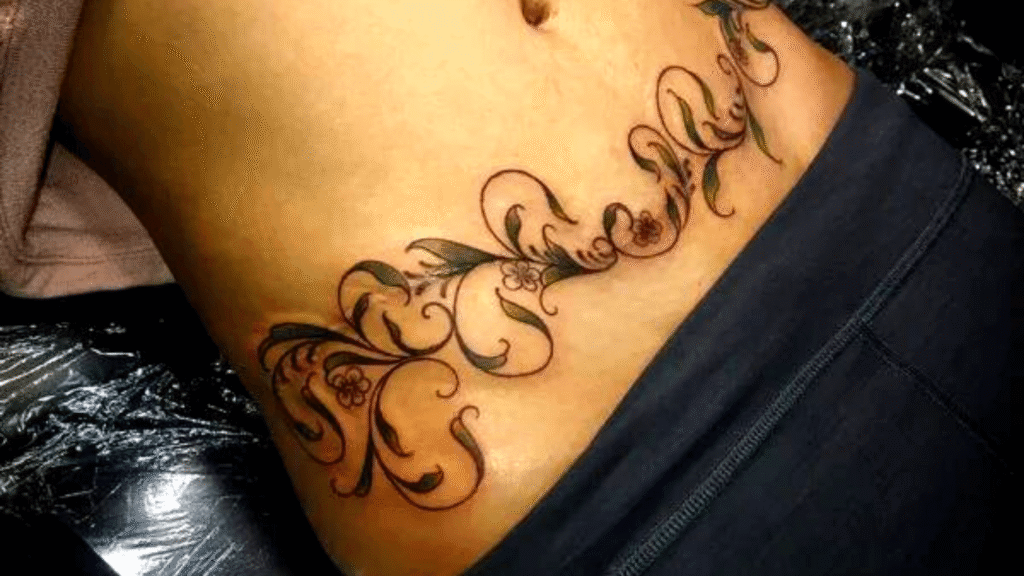
Our team understands how upsetting these cases can be and how quickly questions build up about evidence, treatment costs, and time limits. Whether your case involves laser resurfacing or other cosmetic injuries, including tattoo removal that caused skin damage or burns, a waxing or skin treatment injury claim, or related facelift claims, we are here to help you understand where you stand.
Call us on 01412801112 or email contact@hdclaims.co.uk for a confidential, no-obligation assessment of your claim.
Statutory Time Limits for Scottish Cosmetic Negligence Claims
In Scotland, cosmetic negligence claims are subject to a 3-year limitation period under the Prescription and Limitation (Scotland) Act 1973. If you miss that deadline, you may lose the right to recover compensation, even where the treatment was clearly negligent.
In many laser skin resurfacing cases, the 3-year period will usually run from the date of treatment itself, although in some cases time may run from a later date of knowledge.
It is also important to know that complaints, emails, or ongoing discussions with the clinic do not protect your position on their own. If the case has not been settled, court proceedings must be raised before the limitation period expires. Depending on the value, complexity, and procedure of the case, it may involve raising the action in the Sheriff Court, the National Personal Injury Court, or the Court of Session in Scotland.
This is especially important in laser resurfacing cases, because people are often told to wait and see whether burns, scarring, redness, or pigment changes will improve with time. But waiting for the skin to settle can mean losing valuable time. If you believe the treatment may have been negligent, it is usually far safer to investigate the claim early than to assume there is still plenty of time.
These claims are pursued within Scotland’s civil legal system, within a wider professional framework that includes standards overseen by the Law Society of Scotland.
FAQs
Can I claim compensation if I signed a clinic consent form before my laser treatment?
Yes, you may still be able to claim. Signing a consent form does not automatically protect a clinic or practitioner if the treatment was carried out negligently. A consent form is usually intended to show that you accepted the ordinary risks of a properly performed procedure, such as temporary redness or swelling. It does not mean you accepted avoidable harm caused by poor technique, unsuitable laser settings, a failure to assess your skin properly, or inadequate aftercare advice. If the treatment fell below a reasonable standard and caused injury, you may still have grounds to claim.
What is the difference between solatium and patrimonial loss in a cosmetic claim?
There are normally two main types of compensation in Scotland. Solatium is compensation for the pain, suffering and emotional distress caused by the injury, including skin damage, scarring or change of appearance. Patrimonial loss covers the financial effect of the negligence. This may include loss of earnings, travel costs, prescription expenses, private corrective treatment, scar management, or other reasonable costs linked to the injury. Both may form part of a laser skin resurfacing claim, depending on the facts of the case.
How long do I have to raise a laser skin injury claim in Scotland?
In Scotland, cosmetic negligence claims are generally subject to a three-year limitation period. In many cases, that period runs from the date of the treatment or from the date you became aware that your injury may be linked to negligent care. Time limits can be important in laser injury cases, especially where a clinic encourages you to wait to see whether burns, pigment changes, or scarring improve. The earlier you investigate your position, the easier it is to protect your claim and preserve useful evidence.
Can I still claim if my laser treatment was done by a beautician rather than a doctor?
Yes. A claim does not depend only on whether the practitioner was a doctor. What matters is whether the treatment was carried out safely and with reasonable care. That applies whether the procedure took place in a clinic, salon, or specialist laser practice.
If the person carrying out the treatment lacked proper training, used the laser incorrectly, or failed to assess your skin properly, and you were injured as a result, you may still be able to claim.
How does a Speculative Fee Agreement work for a cosmetic negligence claim?
A Speculative Fee Agreement is the Scottish term often used for a no win, no fee arrangement. It means you can usually have your case assessed and investigated without paying legal fees upfront. It means you can usually have a solicitor take on your case without paying legal fees upfront. If the claim is successful, a success fee may be deducted from the compensation recovered, subject to the agreement in place. This can make it easier to investigate a claim without taking on high upfront legal costs.
We’re Here To Help When You Need Us Most.
Call us on 0141 2801112, or leave us a message below to request a call back and one of our team will be in touch as soon as we can.