- Obligation-Free Consultation
- No Win, No Fee
- Award-Winning Lawyers
As Featured In:
Check Out Our Awesome Reviews Below:
EXCELLENT Based on 99 reviews Posted on Google Daniel MorosanuTrustindex verifies that the original source of the review is Google. I cannot thank the team at HD Claims enough for their help with my personal injury claim. From day one, their injury lawyers were incredibly professional, explaining the no win no fee process clearly without complex jargon. They took away all the stress of dealing with the insurance companies and secured the accident compensation I was entitled to. If you are looking for reliable personal injury solicitors who truly look out for your best interests, I highly recommend their services.Posted on Google Gigel stoicaTrustindex verifies that the original source of the review is Google. HD Claims made my personal injury claim simple and stress-free. The team was professional, responsive, and kept me updated throughout the process. I would recommend them to anyone needing help with an accident compensation claimPosted on Google Muhammed AhmedTrustindex verifies that the original source of the review is Google. I was involved in a car accident where my car was written off and my passengers were seriously injured. I contacted HD Claims and received an excellent service from start to finish. They were very understanding and took the time to explain the whole process clearly. In the end, I received a very favourable settlement. I would most definitely recommend this firm to anyone in a similar situation.Posted on Google Sarah TaylorTrustindex verifies that the original source of the review is Google. Excellent service from HD Claims! They completely managed my personal injury claim from start to finish and allocated me a fantastic specialist solicitor. The whole process was handled on a 'no win no fee' basis, making it entirely stress-free. Their communication was top-notch, and I am very happy with the final settlement I received. I highly recommend their team to anyone looking for reliable legal support.Posted on Google Nico SullivanTrustindex verifies that the original source of the review is Google. HD Claims were brilliant after my accident. They handled everything smoothly and kept me informed the whole time. If you need personal injury lawyers with car accident experience, they’re a great choice.Posted on Google faiq zebTrustindex verifies that the original source of the review is Google. I've used HD Claims for a few car accidents I've suffered over the years as a taxi driver. Always received a great experience and compensation - Asif Khan GlasgowPosted on Google picui bossTrustindex verifies that the original source of the review is Google. Hey my name is Andrei and I’m with John white my self and they are They are the best 100% in all Scotland you should try with them. They’re the best service and they provide with everything. What you want to know about and I give them out 10 out of 10.Posted on Google GAMERS ONLYTrustindex verifies that the original source of the review is Google. Was a very good service 👏Posted on Google Sunny InboxTrustindex verifies that the original source of the review is Google. I had a great experience with HD Claims. The injury lawyers were professional, responsive, and explained everything clearly. They handled my case with care and confidence, making the whole process stress-free. Highly recommended for injury claims.Posted on Google John SmithTrustindex verifies that the original source of the review is Google. My insurance company recommended a firm that charged 30% and had poor reviews. I went with Hamilton Douglas instead, who charged far less and were completely transparent. They were professional, communicative, and secured me an excellent settlement. Do your research and pick them.Verified by TrustindexTrustindex verified badge is the Universal Symbol of Trust. Only the greatest companies can get the verified badge who has a review score above 4.5, based on customer reviews over the past 12 months. Read more
When something goes wrong after cosmetic ear surgery, the key question is whether it was a recognised risk or whether it may be due to medical negligence. A disappointing result alone is not always enough. But where harm was caused by a surgical error, poor aftercare, or a failure to explain material risks properly, there may be grounds to pursue an ear surgery negligence claim in Scotland.
At HD Claims, we help people across Scotland understand the difference in clear, practical terms, whether treatment took place in Glasgow, Edinburgh, Aberdeen, or elsewhere in Scotland. We support injured patients at the start of a potential negligence case by working alongside specialist cosmetic surgery negligence solicitors.
This can be especially important where the outcome involves visible disfigurement, infection, hearing loss, or nerve damage. In these situations, the issue is not just that the result was upsetting, but whether the treatment fell below the standard expected of a reasonably competent practitioner.
Our role is to manage the legal strategy of your claim from the outset and work alongside the solicitor best suited to your case. In suitable claims, funding may be available through a Speculative Fee Agreement, the Scottish equivalent of no win, no fee. This can give you a clearer route to answers, support, and the legal advice needed to decide what to do next.
Speak to our compensation experts
It doesn't cost you anything to know where you stand.
Fill out the form, and we'll get back to you within one hour.
Need to speak to us sooner?
Call us on 0141 280 1112
- Over £3+ Million in Settlements
- No Win, No Fee
- Supporting Scots Since 2010
- 10 Offices Around Scotland
Request a FREE call
Need urgent medical help after ear surgery?
Seek urgent medical attention straight away if you have any of the following:
- Severe pain
- Increasing swelling
- Heavy bleeding
- A high fever
- Discharge from the wound
- Sudden hearing loss
- New facial weakness
- You feel seriously unwell
Contact your surgical team, NHS 111, your GP, or attend A&E in an emergency. Your health should always come first. This page explains your legal options, but it is not a substitute for urgent medical care.
What Is Corrective Ear Surgery?
Corrective ear surgery can mean two different things, and the difference matters when you are trying to understand what treatment you had.
The first type is cosmetic ear surgery. This includes otoplasty, often called ear pinning, which is used to change the position, shape, or size of the ears. It is often chosen when the ears stick out or look too large for the head.
This kind of surgery may be carried out privately or, in some cases, through the NHS. It is often performed on both ears to improve balance and symmetry. When it is done properly, the results are usually good.
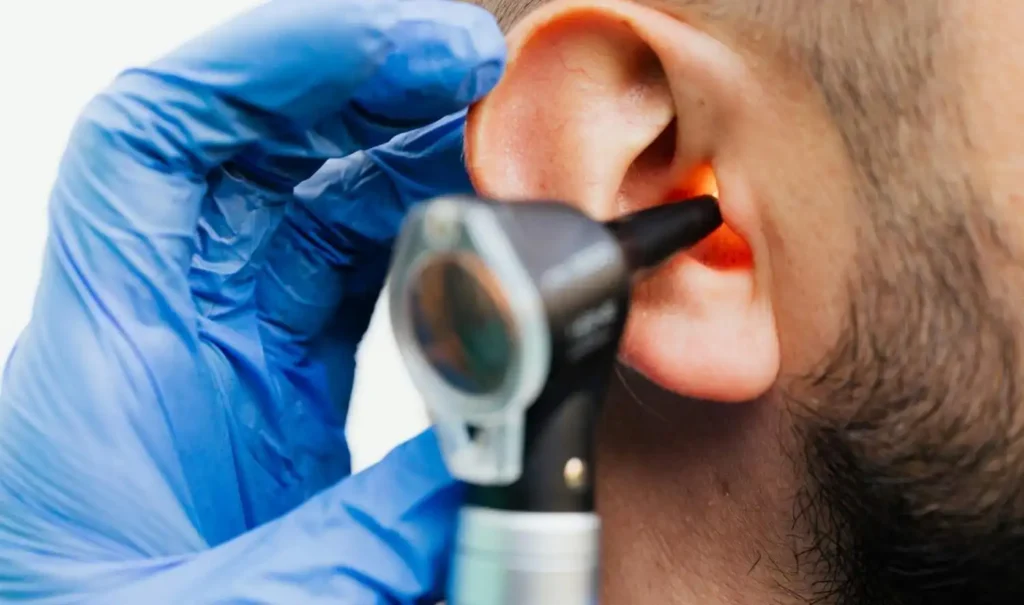
The second type is medical ear surgery, usually carried out by an ear, nose and throat (ENT) specialist. They may be used to remove a cholesteatoma (an abnormal skin growth behind the eardrum), carry out a mastoidectomy (surgery to remove infection or disease from the bone behind the ear), or perform a stapedectomy (an operation to improve hearing by replacing a small bone in the middle ear).
The aim in these cases is not to change appearance. It is to treat disease, reduce infection, protect the ear, or help prevent hearing loss.
That is why two people may both say they had ear surgery, but their cases may be very different. One may have had ear pinning for prominent ears, while another may have had surgery to treat a serious ear condition. Knowing which type of procedure you had helps clarify what standard of care should have been provided.
Ear Surgery Claims: Cosmetic Otoplasty Complications
Cosmetic otoplasty is often described as a routine procedure, but poor technique or poor aftercare can cause lasting harm. In these cases, the problem is not simply that the result looks disappointing. The real issue is whether avoidable mistakes caused injury that should never have happened.
Some of the clearest examples involve asymmetrical ears or overcorrection that leaves the ears pinned too tightly against the head. A surgeon may remove too much cartilage, reshape the ear badly, or fail to plan properly for balance on both sides. What should have been a cosmetic improvement can then leave a person with an unnatural contour that is hard to hide and difficult to correct.
Other cases involve post-operative complications that should have been prevented or treated much sooner. A severe haematoma (a collection of blood under the skin) can put pressure on the tissue and affect healing. If this interferes with the blood supply, the cartilage can begin to die, which may result in permanent deformity.
Suture infections can also be a warning sign, especially where aftercare advice was poor or important symptoms were missed after surgery. These claims often depend on how quickly problems were recognised and treated. If swelling, pain, discharge, or changes in skin colour were ignored, that may point to negligent treatment rather than a normal surgical risk.
Where that has happened, our team can help you understand whether the outcome may support a claim and what evidence will matter most.
Similar issues can arise after dermal fillers, facelifts, rhinoplasty, or other cosmetic procedures, especially where poor technique, poor planning, or inadequate aftercare leads to avoidable harm.
Proving Negligence and Lack of Informed Consent
When someone asks whether they may have a claim, there are usually two main questions to consider: did the surgeon make a mistake or fall below the expected standard of care, and did that failure actually cause the harm that followed?
That means it is not enough to say the result was poor. The question is whether the treatment fell below the standard expected of a competent surgeon and whether that failing led to the injury, such as deafness, facial weakness, or avoidable pain.
When considering whether there may be a claim, one part of the issue is the surgeon’s duty of care. That includes not only how the procedure was performed, but also whether you were properly informed beforehand.
Informed consent is not just a signature on a form. Before agreeing to surgery, you should be given clear, honest advice about the material risks, the likely outcome, and any reasonable alternatives.
So if a surgeon failed to warn you about a real risk of nerve damage or hearing loss, that can matter even if the operation itself was carried out carefully. If, had you been properly warned, you would have delayed the procedure, refused it, or chosen a different option, that failure may itself amount to negligence.
These cases often depend on records. The consent discussion, clinic letters, and operation notes can all help show what you were told, what was left out, and whether the harm was the direct result of that failure. This can help show whether the treatment fell below the expected standard and whether that failure caused the injury.
Evidence To Support Ear Correction Surgery Negligence Claims
If you believe something went wrong with your ear surgery, the best evidence is usually the paperwork, photos, and records created at the time. Memories matter, but documents often tell a clearer story. The sooner you gather them, the better.
A practical starting point is to request your records from the hospital, clinic, or other treatment provider through a Subject Access Request. Ask for your full file, including pre-op assessments, consent forms, surgical notes, anaesthesia records, aftercare advice, follow-up letters, and any complaint responses.
Alongside the medical records, it can help to build your own evidence file.
Useful items include:
- Clear before-and-after photographs taken in good light and from more than one angle
- Emails, letters, and messages exchanged with the clinic, hospital, or surgeon
- Receipts and invoices for medication, revision treatment, travel, and time off work
- A short diary of pain, swelling, discharge, sleep problems, embarrassment, and day-to-day impact
- Names and contact details for anyone who saw the condition of your ears or your recovery
In cosmetic cases, photographs can be especially important where there is asymmetry, visible deformity, or poor scarring. In medical cases, hearing tests, GP records, and hospital reviews may help show how symptoms developed after surgery.
Your solicitor may also arrange an independent ENT expert assessment. That report can be vital because it deals with two key questions: whether the treatment fell below a proper standard, and whether that failure caused the injury.
If you already have documents or photos, keep them safe and do not edit or filter them. A well-prepared file can make a real difference when assessing hospital or surgical negligence compensation.

Making A Personal Injury Claim In Scotland
Our panel of experienced personal injury lawyers excel in handling cases against well-funded insurance companies.
Our specialised injury lawyers will assist you with your claim, keep you informed throughout the whole process, and provide you with legal advice that is easy to understand.
01
Get In Touch.
Tell us your story, we're here to listen and provide you with an initial assessment based on your circumstances.
02
We’ll Prepare Your Claim.
We'll be by your side to take care of the legal process. We'll keep you informed of every step of the way.
03
Receive Compensation.
If your claim is successful, we'll ensure that you get your compensation as soon as possible.
"A Student’s Journey from Trauma to Triumph: Efthymios’s Fight for Justice After a Devastating Car Accident"
When Efthymios was injured in a car accident, he was left with severe facial injuries. He didn’t know how he would manage his recovery and studies.
“When I got in contact with HD Legal, they made me feel supported. They were incredibly understanding and fought hard for me, ensuring I received the compensation I deserved.”
"Cracked Pavement, Broken Ankle: How HD Legal Helped Margaret Find Justice and Peace of Mind"
When Margaret tripped on a neglected crack in the pavement in Glasgow, she shattered her ankle and was forced to take months off work, unsure how she would manage.
“HD Legal were a lifeline for me. They took care of everything—from gathering crucial evidence to battling the council—and gave me the peace of mind I needed to focus on my recovery.”
"Blown Away: HD Legal Fights for Douglas After Faulty Washing Machine Explosion"
When Douglas’s new washing machine exploded, it caused a fire that damaged his kitchen and left him with painful burns.
“HD Legal fought relentlessly for me when it seemed like no one else would. They were thorough, professional, and supported me every step of the way, helping me recover both physically and financially.”
"From Misdiagnosis to Recovery: How HD Legal Fought for Eilidh’s Justice and Secured the Care She Needed"
When Eilidh’s severe abdominal pain was repeatedly misdiagnosed, her condition worsened, leading to the need for urgent surgery.
“HD Legal stood by me when I felt lost. They were thorough, professional, and fought tirelessly to get me the care and compensation I needed to heal.”
"Falling from Heights, Rising with Justice: How HD Legal Secured Compensation for Alistair After a Workplace Accident Involving Faulty Scaffolding"
Alistair Campbell’s fall from faulty scaffolding left him with serious injuries and months of recovery.
“HD Legal’s panel of solicitors fought for me, ensuring I received the support needed to move forward.”
How Much Compensation For Botched Ear Correction Surgery?
There is no fixed payout for botched ear correction surgery. Every claim depends on its own facts, the seriousness of the injury, and how long the effects are likely to last.
A medical expert will usually assess the harm in detail. That report helps show not only what went wrong, but how the injury has affected your hearing, appearance, comfort, confidence, and day-to-day life.
In Scotland, compensation usually has two parts.
Solatium covers the physical and emotional impact of the injury. That can include pain, permanent hearing loss, facial disfigurement, ongoing discomfort, and the distress that often follows a poor cosmetic or surgical result.
This may include:
- Private revision surgery or other remedial treatment
- Hearing aids, medication, and follow-up care
- Lost wages, including future loss of earnings
- Travel costs to appointments
- Care or support provided by others
This is why the value of a claim is not just about the procedure itself. It is about the full effect on your life now and in the future.
The long-term impact can be more significant than many people first realise. If you are likely to need further treatment, or if your symptoms may continue to affect your work, sleep, confidence, or social life, that should be taken into account before any claim is settled.
If you want to get a rough estimate of the value of your ear negligence claim, use our compensation calculator.
Ear Correction Surgery Negligence Claim Time Limits
Time limits are an important part of ear surgery negligence claims. In Scotland, the usual rule is set out in the Prescription and Limitation (Scotland) Act 1973. In most cases, you have three years to start a claim.
That three-year period will often run from the date of the surgery. But not every case is clear on day one. Sometimes the real problem only becomes obvious later.
This is where the date of knowledge can matter. That is the point when you first knew, or could reasonably have known, that your injury may have been caused by a surgical error rather than a normal outcome or natural progression.
For example, you may be told at first that your symptoms are part of recovery. Weeks or months later, you may learn that your hearing loss, facial weakness, or ongoing pain was linked to negligent treatment. In that kind of case, the later date may be important.
Even so, it is risky to wait. Starting early gives your solicitor more time to gather records, arrange expert evidence, and protect your position before the deadline becomes an issue.
If court proceedings are needed, they are usually raised in the sheriff court. Depending on the case, that may be your local Sheriff Court or the All-Scotland Sheriff Personal Injury Court in Edinburgh for eligible personal injury actions.
The safest approach is not to guess which date applies. If you think something went wrong, get advice as soon as you can.
DEDICATED CLAIMS ADVISORS
Our dedicated claims advisors are always available to offer free legal advice.
100% NO WIN NO FEE CLAIMS
All our claims are processed on a No Win No Fee basis; you pay nothing if you lose.
MILLIONS SECURED IN DAMAGES
To date, we have secured millions in damages.
THOUSANDS OF SATISFIED CLIENTS
To date, we have helped thousands of clients recover compensation and continue to do so.
Making Ear Injury Claims on a No Win No Fee Basis
For many people across Scotland, the biggest concern is not just whether they have a claim, but the cost of bringing one. That is why ear injury claims are often handled through a Speculative Fee Agreement, which is the Scottish version of no win, no fee.
In simple terms, you would not usually pay legal fees up front. If the claim succeeds, the solicitor’s fee is handled under the agreement. If the claim does not succeed, you would not normally be liable for a success fee.
What matters most is that the funding is explained properly at the start. You should be told, in clear terms, how the agreement works, whether any deduction may be made from compensation, and what happens with outlays such as medical reports or court fees.
There is also an important layer of protection in Scotland called Qualified One-Way Costs Shifting, or QOCS. In most personal injury cases, this means you would not usually have to pay the other side’s legal costs if your claim is unsuccessful.
That protection can make a real difference. It gives people room to ask questions, obtain expert advice, and pursue a claim without the same fear of being left with the defender’s legal bill if the case does not succeed.
Like any legal protection, QOCS has its limits. In some situations, such as fraud or clearly unreasonable conduct, the court can remove that protection. But in ordinary claims that are brought properly, QOCS is designed to reduce the financial risk of pursuing a case.
All of this sits within the wider Scottish legal system, including the courts, professional standards, and complaints framework involving bodies such as the Scottish Courts and Tribunals Service, the Law Society of Scotland, and the Scottish Legal Complaints Commission.
FAQs
What counts as ear surgery negligence in Scotland?
Ear surgery negligence may happen where the surgeon, clinic, or aftercare team falls below a reasonable standard and that causes avoidable harm. This could include a surgical error, poor monitoring after the operation, delayed treatment for infection or haematoma, or a failure to warn you about material risks before you agreed to treatment. A disappointing result alone is not usually enough.
Can I claim if my ear surgery was done privately or through the NHS?
Yes. A claim may be possible whether the treatment was provided privately or on the NHS, as long as negligence can be shown. What matters is whether the care you received fell below the standard expected of a competent practitioner and caused injury or loss.
Do I need to prove that I would not have had the surgery if I had been properly warned?
Not always, but informed consent can be important. If you were not told about a material risk such as hearing loss, facial weakness, or permanent scarring, that may support a claim. In some cases, it may also matter if you would have chosen not to proceed, delayed treatment, or selected a different option had you been properly advised.
What evidence is most useful in an ear surgery negligence claim?
The most helpful evidence usually includes your full medical records, consent forms, operation notes, aftercare instructions, follow-up letters, and clear photographs showing the change before and after surgery. A diary of symptoms, messages with the clinic, receipts for extra treatment, and witness evidence can also help show the impact of the injury.
How long do I have to make an ear surgery negligence claim in Scotland?
In most cases, you have three years to start a claim. That time limit may run from the date of surgery or from the date you first knew, or could reasonably have known, that the harm may have been caused by negligent treatment. Because the rule can be complex, it is best to get advice as early as possible.
How much compensation could I receive for botched ear correction surgery?
There is no fixed amount. Compensation depends on the severity of the injury, whether the damage is temporary or permanent, and how it affects your work, appearance, comfort, confidence, and future treatment needs. In Scotland, compensation may include solatium for pain and distress, plus financial losses such as revision surgery, lost earnings, medication, and travel costs.
We’re Here To Help When You Need Us Most.
Call us on 0141 2801112, or leave us a message below to request a call back and one of our team will be in touch as soon as we can.