

- Obligation-Free Consultation
- No Win, No Fee
- Award-Winning Lawyers
As Featured In:






















Check Out Our Awesome Reviews Below:
EXCELLENT Based on 99 reviews
 Posted on Google
 Daniel MorosanuI cannot thank the team at HD Claims enough for their help with my personal injury claim. From day one, their injury lawyers were incredibly professional, explaining the no win no fee process clearly without complex jargon. They took away all the stress of dealing with the insurance companies and secured the accident compensation I was entitled to. If you are looking for reliable personal injury solicitors who truly look out for your best interests, I highly recommend their services.Posted on Google
 Gigel stoicaHD Claims made my personal injury claim simple and stress-free. The team was professional, responsive, and kept me updated throughout the process. I would recommend them to anyone needing help with an accident compensation claimPosted on Google
 Muhammed AhmedI was involved in a car accident where my car was written off and my passengers were seriously injured. I contacted HD Claims and received an excellent service from start to finish. They were very understanding and took the time to explain the whole process clearly. In the end, I received a very favourable settlement. I would most definitely recommend this firm to anyone in a similar situation.Posted on Google
 Sarah TaylorExcellent service from HD Claims! They completely managed my personal injury claim from start to finish and allocated me a fantastic specialist solicitor. The whole process was handled on a 'no win no fee' basis, making it entirely stress-free. Their communication was top-notch, and I am very happy with the final settlement I received. I highly recommend their team to anyone looking for reliable legal support.Posted on Google
 Nico SullivanHD Claims were brilliant after my accident. They handled everything smoothly and kept me informed the whole time. If you need personal injury lawyers with car accident experience, they’re a great choice.Posted on Google
 faiq zebI've used HD Claims for a few car accidents I've suffered over the years as a taxi driver. Always received a great experience and compensation - Asif Khan GlasgowPosted on Google
 picui bossHey my name is Andrei and I’m with John white my self and they are They are the best 100% in all Scotland you should try with them. They’re the best service and they provide with everything. What you want to know about and I give them out 10 out of 10.Posted on Google
 GAMERS ONLYWas a very good service 👏Posted on Google
 Sunny InboxI had a great experience with HD Claims. The injury lawyers were professional, responsive, and explained everything clearly. They handled my case with care and confidence, making the whole process stress-free. Highly recommended for injury claims.Posted on Google
 John SmithMy insurance company recommended a firm that charged 30% and had poor reviews. I went with Hamilton Douglas instead, who charged far less and were completely transparent. They were professional, communicative, and secured me an excellent settlement. Do your research and pick them.Verified by TrustindexTrustindex verified badge is the Universal Symbol of Trust. Only the greatest companies can get the verified badge who has a review score above 4.5, based on customer reviews over the past 12 months. Read more
If you have been injured in a road traffic accident in Scotland because another person failed to take reasonable care, you may be entitled to claim compensation. This can include compensation for your injuries, lost earnings, treatment costs, damaged belongings and other accident-related expenses.
HD Claims manages the legal strategy of your claim from start to finish. We work alongside a team of specialist personal injury solicitors best suited to the circumstances of your case. We oversee the process, keep you informed and help ensure your representation is tailored to your injuries, recovery and financial needs.
Whether you were a driver, passenger, pedestrian, cyclist or motorcyclist, we provide clear guidance under Scots law while you focus on treatment and rehabilitation.

How Can HD Claims Assist With Your Car Accident Injury Claim?
A road collision can leave you dealing with physical pain, vehicle damage, time away from work and pressure from insurance companies. You should not have to manage every part of the claims process alone.
Our role is to build and manage the legal strategy of your claim.
This may include:
- Reviewing how the collision happened
- Identifying the person or organisation responsible
- Preserving dashcam footage, CCTV and witness evidence
- Obtaining police and medical records
- Arranging appropriate medical assessments
- Calculating your injuries and financial losses
- Communicating with the responsible party’s insurer
- Challenging an unfair settlement offer
- Coordinating treatment, rehabilitation and expert evidence
- Preparing the claim for court where settlement cannot be agreed
We work alongside a specialist personal injury solicitor whose experience matches the type of accident and injuries involved. This allows us to provide focused representation in claims ranging from minor soft tissue injuries to serious brain, spinal and orthopaedic trauma.
Do You Need Legal Representation for a Car Accident Claim?
You may not need legal representation for a minor collision that caused no injury and involves no disagreement about vehicle damage. However, it is sensible to obtain advice when injuries, financial losses or disputed liability are involved.
A road traffic claim can become complicated when an insurer questions how the accident happened, disputes whether the collision caused your symptoms or makes an offer before your medical prognosis is clear.
Consider obtaining legal help if:
- You or a passenger suffered an injury
- Your symptoms have affected your work or daily activities
- The other driver disputes responsibility
- You may have been partly responsible for the collision
- The responsible driver was uninsured or left the scene
- The accident involved a child or vulnerable adult
- You require ongoing rehabilitation or future care
- An insurer has made an early settlement offer
- Your injuries may have long-term consequences
In Scottish court proceedings, the injured person bringing the claim is normally called the pursuer. The person or organisation against whom the action is raised is called the defender. We ensure the evidence supports both liability and quantum (amount of compensation being sought).
Types of Motor Accident Claims we Handle
Road traffic accidents can involve different vehicles, injuries and questions of liability. We manage each claim according to its particular facts and work alongside a specialist solicitor with relevant experience.
Car Accident Claims Scotland
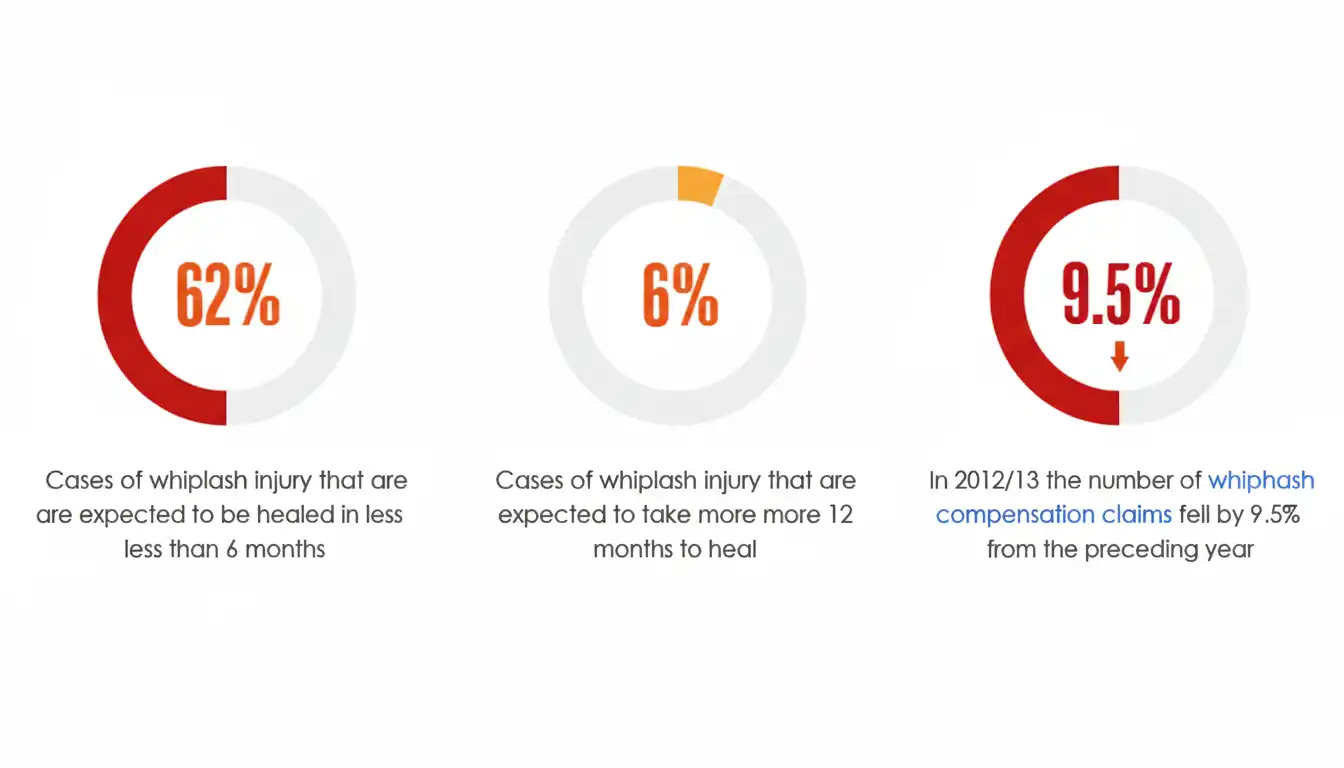
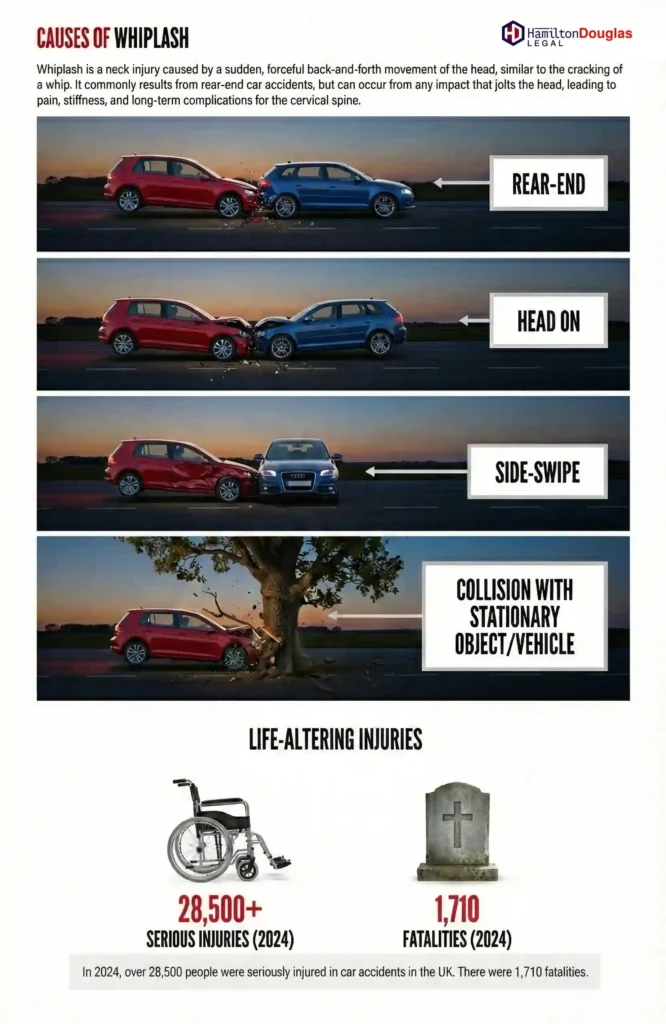
We handle claims involving drivers injured in rear-end collisions, side impact crashes, head-on accidents, junction collisions, roundabout accidents and multi-vehicle accidents.
Car accident injuries can range from whiplash and muscular strains to fractures, internal injuries, psychological trauma, brain injuries and spinal damage. Even a collision at a relatively low speed can cause a genuine soft tissue injury that affects sleep, movement and work.
The specialist solicitor working alongside us can deal directly with the responsible driver’s insurer. This means you are not left to negotiate liability, medical evidence or compensation without professional support.
In a multi-vehicle collision, several insurers may be involved. Evidence such as vehicle positions, impact damage, dashcam footage, CCTV, witness statements and accident reconstruction reports may be needed to establish what happened.
Motorcycle and Cycling Accident Claims
Motorcyclists and cyclists have less physical protection than people travelling inside a vehicle. They can therefore suffer serious injuries even when the collision happens at a relatively low speed.
These claims may involve:
- Brain and head injuries
- Spinal cord damage
- Complex fractures
- Amputations
- Facial and dental injuries
- Road rash and scarring
- Shoulder, wrist and hand injuries
- Psychological trauma
- Loss of mobility or independence
Serious injury claims require more than an assessment of immediate pain. The legal strategy may also need to cover future care, rehabilitation, mobility equipment, adapted accommodation, prosthetics, loss of pension and reduced earning capacity.
You can learn more from our dedicated pages on Cycling Accident Claims and Motorcycle Accident Claims.
Pedestrian Accident Compensation
A pedestrian may be entitled to compensation when a negligent driver causes an injury at a crossing, junction, car park, pavement entrance or other part of the road.
Pedestrians are vulnerable road users, but a successful claim still depends on evidence. The circumstances may include the driver’s speed, visibility, road layout, traffic signals, distractions and whether reasonable care was taken.
Cases can remain valid even when liability is complicated. For example, a defender may argue that the pedestrian stepped into the road unexpectedly. If responsibility is shared, the court may apply contributory negligence and reduce compensation by an appropriate percentage rather than rejecting the entire claim.
Read more about Pedestrian Accident Claims.
Passenger Claims on Public or Private Transport
Passengers are rarely responsible for causing a road collision. A passenger may be able to claim against:
- The driver of the vehicle in which they were travelling
- The driver of another vehicle
- More than one responsible party
- A bus, coach, taxi or private hire operator
- The insurer responsible for the vehicle
You may still claim if the driver responsible was a friend, colleague or family member. Compensation is normally dealt with by the relevant insurer rather than being paid personally by the driver.
Passenger claims can arise from private cars, taxis, buses, coaches, minibuses and other forms of public or private transport. We identify the correct defender and manage communication between the parties where several insurers are involved.
Hit and Run & Uninsured Driver Claims
You may still have a route to compensation if the responsible driver was uninsured or could not be traced.
The Motor Insurers’ Bureau, known as the MIB, deals with qualifying claims involving uninsured and untraced drivers. An uninsured driver is usually identifiable but does not have valid insurance. An untraced driver is someone whose identity cannot be found, often because they left the scene or provided false details.
These claims follow a specific framework and may require evidence such as:
- A police incident number.
- The vehicle registration, make or colour.
- Witness contact details.
- CCTV or dashcam footage.
- Medical records.
- Photographs of the scene and damage.
- Proof of financial losses.
If you are involved in a hit-and-run, it’s crucial to report it to the police within 14 days to meet MIB requirements. After that, you generally have up to three years to submit your personal injury claim. Different periods can apply to property damage, so early action remains important. You can check the current requirements through the Motor Insurers’ Bureau claims process.
For further guidance, read Claim Against Uninsured Driver and Hit And Run Accident Claim.

Understanding Whiplash Claims in Car Accidents
Whiplash is a soft tissue injury that commonly affects the neck, shoulders or upper back. It can happen when the head moves suddenly backwards and forwards during a collision.
The official medical term for this is Whiplash Associated Disorder (or WAD), and it can lead to a range of symptoms such as:
- Neck pain and stiffness
- Reduced movement
- Shoulder or upper back pain
- Headaches
- Dizziness
- Sleep disturbance
- Tingling or altered sensation
- Difficulty concentrating
- Travel anxiety

Symptoms are not always immediate. Some people notice discomfort several hours or even a day after the collision. You should obtain medical advice if you develop pain or other symptoms following an accident.
Medical evidence is important because it helps establish causation, diagnosis, treatment needs and prognosis. The prognosis is the period within which the medical expert expects the symptoms to improve or resolve.
A successful claim may include solatium for pain and loss of amenity, together with lost earnings, treatment costs, travel expenses and other financial losses.
How Much Compensation Can I Claim for a Car Accident in Scotland?
There is no single average payout for a Scottish road traffic accident claim. Compensation depends on the nature of the injury, its severity, recovery time, medical prognosis and effect on the pursuer’s life.
Scottish practitioners and courts may refer to the Judicial College Guidelines when assessing solatium. These guidelines are not a fixed Scottish tariff and are not binding on the court.
The following figures are broad reference brackets for the injury itself. They do not include lost income, treatment, care, rehabilitation or other special damages.
| Injury type | General description | Indicative guideline bracket |
|---|---|---|
| Minor neck | Full or substantial recovery within approximately two years | Up to £10,420 |
| Moderate neck injury | Continuing symptoms, restricted movement or more serious soft tissue and disc injuries | Approximately £10,420 to £50,850 |
| Minor back injury | Strains and soft tissue injuries with a good recovery | Up to approximately £16,520 |
| Moderate back injury | Disc injuries, continuing pain, restricted movement or surgery | Approximately £16,520 to £51,230 |
| Wrist fracture | Recovery and lasting effects depend on the nature of the fracture | Approximately £4,670 to £13,670 |
| Moderate ankle injury | Fractures, ligament damage or continuing difficulty with movement | Approximately £18,150 to £35,130 |
| Very severe brain injury | Profound disability and substantial lifelong care requirements | Approximately £372,570 to £533,720 |
| Paraplegia | Paralysis of the lower body with long-term care and mobility needs | Approximately £289,420 to £375,540 |
These are starting references rather than guaranteed Scottish awards. The final valuation will depend on Scottish authorities, comparable cases and the individual evidence.
Solatium and Special Damages
Scottish compensation normally has two main components.
Solatium compensates for the injury itself, including pain, suffering and loss of amenity. Loss of amenity means the effect the injury has had on normal activities, independence, hobbies, relationships and quality of life.
Special damages cover measurable financial losses caused by the accident.
These may include:
- Past and future loss of earnings
- Medical and rehabilitation costs
- Physiotherapy and psychological treatment
- Prescription charges
- Travel to appointments
- Care and assistance provided by relatives
- Mobility equipment
- Adapted accommodation or transport
- Vehicle and personal property damage
- Replacement of a child car seat
- Future pension loss
- Professional care and case management
In serious injury cases, future care and loss of earnings can form a larger part of the settlement than the award for the injury itself.
No Win No Fee Car Accident Claims: How Do They Work?
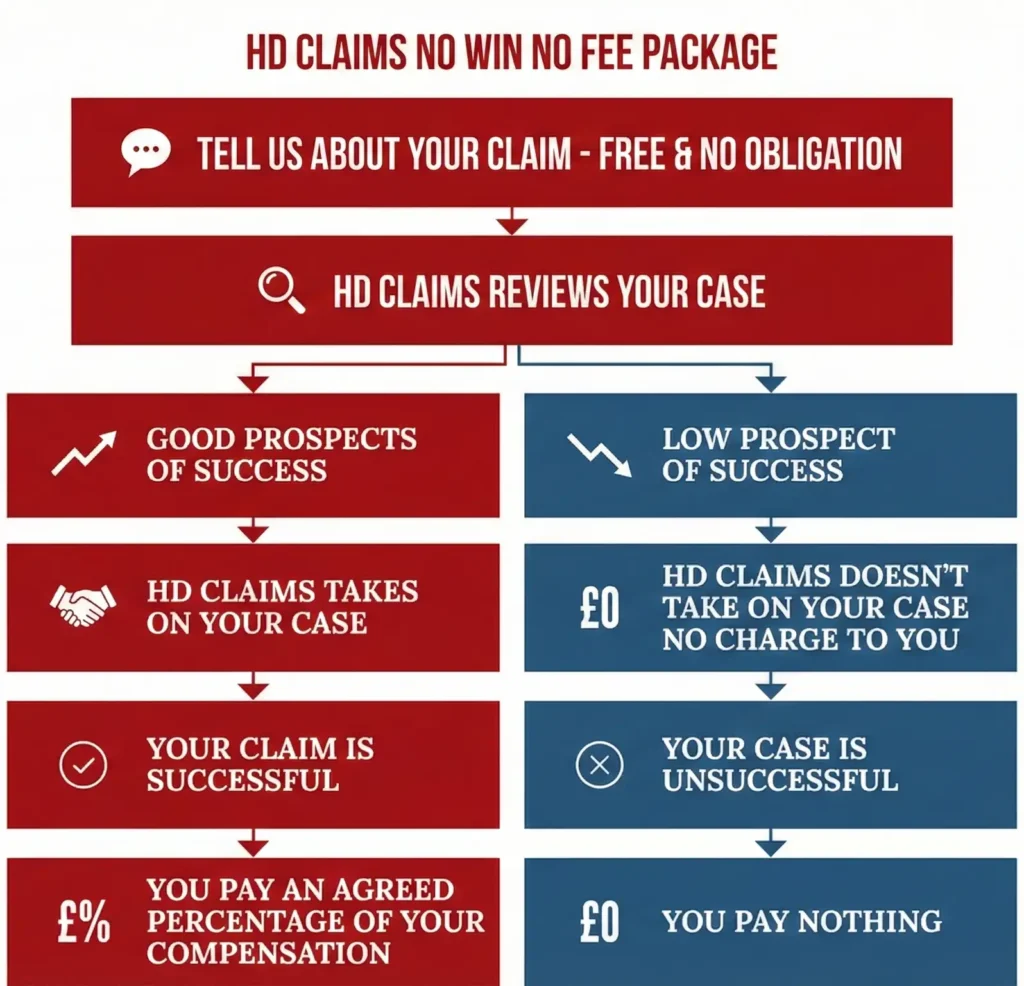
A No Win No Fee arrangement allows an eligible pursuer to begin a claim without paying legal fees upfront. The exact terms will be explained in writing before the claim proceeds.
If the claim is unsuccessful, you are typically protected from paying legal costs and outlays (such as fees for medical expert reports or court dues) through After The Event (ATE) insurance or a similar funding protection scheme. The funding agreement will explain exactly how these outlays are handled and confirm this protection so you are not left out of pocket.
If the claim succeeds, an agreed success fee may be deducted from the compensation. Scottish regulations place sliding caps on success fees in personal injury cases:
- Up to 20% of the first £100,000 recovered
- Up to 10% of the next £400,000
- Up to 2.5% of compensation above £500,000
These are maximum statutory limits and do not automatically mean the highest percentage will apply. The agreed percentage, VAT treatment, outlays (and any ATE insurance premium arrangements) will be explained before you sign. The caps are set out in the Civil Litigation (Expenses and Group Proceedings) (Scotland) Act 2018 regulations.
Your no win, no fee solicitor will explain the funding terms clearly so you understand what may be deducted if the claim succeeds, and how you are protected if it does not.
Speak to our compensation experts
It doesn't cost you anything to know where you stand.
Fill out the form, and we'll get back to you within one hour.
Need to speak to us sooner?
Call us on 0141 280 1112
- Over £3+ Million in Settlements
- No Win, No Fee
- Supporting Scots Since 2001
- 10 Offices Around Scotland
Request a FREE call
Steps to Take Immediately After a Car Accident
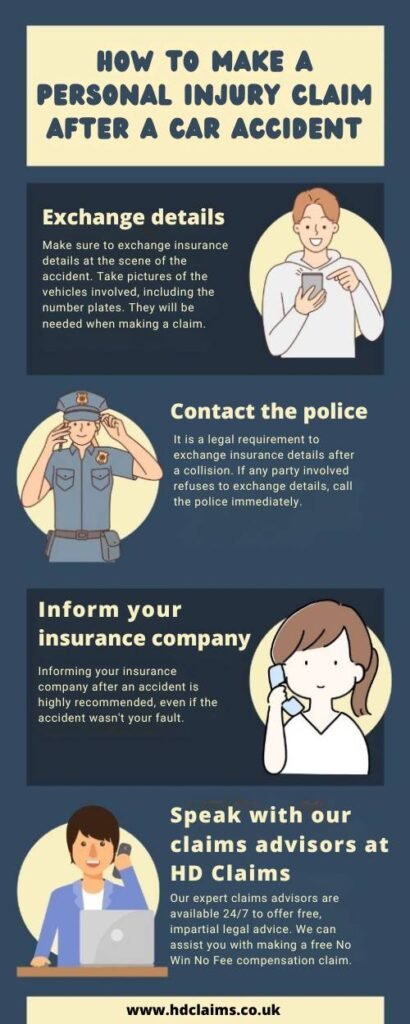
Your health and safety should come first. Move to a safe location if possible, switch off your engine and turn on your hazard lights.
You should then:
- Check yourself and your passengers for injuries
- Call emergency services if anyone is injured or the road is blocked
- Exchange names, addresses and vehicle registration details
- Obtain the vehicle owner’s details if different from the driver
- Ask for insurance information
- Avoid arguing about responsibility at the scene
- Record the location, date, time, weather and road conditions
- Take photographs or video where it is safe
- Collect witness contact details
- Inform your insurer, even if you do not intend to claim
Under section 170 of the Road Traffic Act 1988, a driver must stop after a qualifying accident. If the required details are not exchanged at the scene, the accident must be reported to the police as soon as reasonably practicable and within 24 hours. The current requirements are explained in the official GOV.UK accident guidance.
Report the collision promptly if the other driver leaves, appears uninsured, gives false information or may have committed an offence.
Essential Documentation to Gather After a Car Accident
Evidence can help establish liability, causation and quantum. Keep the following where available:
- Vehicle registration numbers
- Driver and vehicle owner details
- Insurance information
- Photographs of vehicle damage
- Images of the road layout and surrounding area
- Dashcam or helmet camera footage
- CCTV details
- Witness names and contact information
- Police reference numbers
- Ambulance and hospital records
- GP and physiotherapy records
- Medical prescriptions
- Repair estimates and
- invoices
- Payslips and absence records
- Receipts for treatment, travel and care
- A symptom and recovery diary
This information can support personal injury claims in Scotland and help demonstrate how the accident has affected your health, finances and daily activities.
How to Start a Car Accident Claim
The claims process begins with an assessment of what happened, who may be responsible and whether the available evidence supports the claim.
A typical process includes:
- Obtain medical care: Seek treatment and ensure your symptoms are recorded.
- Report the accident: Notify your insurer and, where required, the police.
- Preserve evidence: Save photographs, footage, witness details and damaged items.
- Record financial losses: Keep receipts, wage records and proof of accident-related costs.
- Obtain legal guidance: Speak to HDClaims so we can assess liability and time limits.
- Build the legal strategy: We work alongside a specialist solicitor suited to your case.
- Notify the defender or insurer: A formal claim is submitted with details of negligence, injuries and losses.
- Obtain medical evidence: Independent reports may be arranged to address diagnosis, causation and prognosis.
- Value the claim: Solatium and special damages are calculated using the available evidence.
- Negotiate or litigate: A settlement is negotiated, or court proceedings are considered when necessary.
You should not settle before the medical position is sufficiently clear. An early offer may fail to account for continuing symptoms, future treatment or loss of earnings.
Determining Fault: Who Is Liable for a Car Accident?
Liability is established by examining whether another road user owed a duty of care, breached that duty and caused the collision and resulting injuries.
Evidence may include:
- Police records
- Witness statements
- Dashcam or CCTV footage
- Vehicle damage
- Road markings and signs
- Mobile phone records
- Medical evidence
- Engineering or accident reconstruction reports
- Highway Code provisions
- Statements made by the drivers
In rear-end collisions, the following driver is often responsible, but liability is not automatic. Sudden unsafe braking, defective lights, vehicle position and other circumstances may need to be considered. Read when is a rear end collision not your fault? for further information.
Side impact cases often depend on priority, signals, lane position and junction layout. Our guide, Side-Impact Collision: who’s at fault?, explains these issues in more detail.
What If You Were Partly Responsible?
You may still recover compensation if you contributed to the accident. This is known as contributory negligence.
For example, if a court decides that another driver was mainly responsible but you were 20% to blame for the collision or your injuries, your compensation may be reduced by 20%.
The 3-Year Time Limit for Scottish Road Traffic Claims
Most personal injury actions in Scotland are subject to a three-year time bar under section 17 of the Prescription and Limitation (Scotland) Act 1973.
The three-year period will normally run from:
- The date of the accident, or
- The date on which the pursuer first became aware of the injury and its connection to the accident, where that knowledge came later
Court proceedings generally need to be raised before the time bar expires. Merely contacting an insurer, beginning negotiations or submitting documents does not necessarily protect the claim from becoming time-barred.
Different rules may apply when the injured person was under 16 at the time of the accident. The three-year period will generally begin on their 16th birthday, meaning an action normally needs to be raised before they turn 19.
A parent or appropriate representative can begin a claim while the child is under 16. This can help preserve evidence and arrange treatment without waiting for the child to reach legal capacity.
The court has limited discretion under section 19A to allow certain late actions, but this should never be relied upon. Seek advice well before the expected deadline.
If you’re claiming through the MIB, you still generally have three years to make your personal injury claim. However, it is a strict MIB requirement that you report a hit-and-run accident to the police within 14 days.
Scottish Pre-Action Protocol: How Your Claim Is Handled
The Compulsory Pre-Action Protocol, commonly called CPAP, provides a structured process for many Scottish personal injury claims valued at £25,000 or less.
It applies to qualifying accidents occurring on or after 28 November 2016. The protocol encourages early investigation, exchange of evidence and settlement before court proceedings become necessary. Its application and £25,000 scope are confirmed by the Scottish Civil Justice Council.
If your claim falls under this protocol, here is a step-by-step look at how the process typically unfolds:
Initial Assessment and Claim Form
We review the accident, available evidence, medical position and financial losses. A formal claim form is then sent to the defender or relevant insurer.
The claim form provides a clear summary of:
- How the accident happened.
- The allegations of negligence
- Any breach of common law or statutory duty
- The injuries sustained
- Treatment received
- Financial losses already identified
Acknowledgement Within 21 Days
The defender or insurer is normally required to acknowledge the claim form within 21 days of receiving it.
Three-Month Investigation
The defender usually has a maximum of three months from receipt of the claim form to investigate liability and provide a response.
The response will state whether liability is admitted or denied. If liability is denied, reasons and relevant supporting documents will normally be provided.
Medical Evidence
Where liability is admitted, medical evidence is obtained to address the nature of the injury, treatment, causation and prognosis.
More than one medical expert may be required in a serious or complex case.
Statement of Valuation of Claim
A statement of valuation sets out the compensation being sought.
It may include:
- Solatium
- Past loss of earnings
- Future earning loss
- Medical and rehabilitation expenses
- Care and assistance
- Travel costs
- Damaged property
- Future care and equipment
- Pension loss
Documents will be provided to support each financial loss.
Settlement Negotiations
The defender’s insurer may make an offer after reviewing the medical evidence and statement of valuation. The offer is assessed against the injuries, prognosis, Scottish case law and documented losses.
You will receive clear advice before deciding whether to accept, reject or make a counterproposal.
Court Proceedings Where Necessary
If liability remains disputed or fair compensation cannot be agreed, court proceedings may be considered.
A qualifying action may be raised in a local sheriff court or the All-Scotland Sheriff Personal Injury Court, often called ASPIC. The All-Scotland Sheriff Personal Injury Court is based in Edinburgh and handles personal injury cases from across Scotland.
Court proceedings normally begin with an initial writ, which sets out the pursuer’s case against the defender. The court may then issue a timetable covering evidence, witness statements, expert reports and the proof hearing.
Most claims settle without a final court hearing. However, your solicitor will build your case from day one with the assumption that they might need to prove it in front of a judge.
Making A Personal Injury Claim In Scotland
Our panel of experienced personal injury lawyers excel in handling cases against well-funded insurance companies.
Our specialised injury lawyers will assist you with your claim, keep you informed throughout the whole process, and provide you with legal advice that is easy to understand.
01
Get In Touch.
Tell us your story, we're here to listen and provide you with an initial assessment based on your circumstances.
02
We’ll Prepare Your Claim.
We'll be by your side to take care of the legal process. We'll keep you informed of every step of the way.
03
Receive Compensation.
If your claim is successful, we'll ensure that you get your compensation as soon as possible.

"How HD Claims Helped Margaret Get £100,000 For Her Injuries"
Margaret Rowan had left her office in Stirling to drive home for a quick lunch break. It was a clear weekday afternoon, and traffic on the A84 just outside the town was steady. Everything changed just a few minutes after she left her home to drive back to work.

"A Painful Arm Fracture From A Scottish Rural Road Crash Leads To A Fair Settlement"
Alastair MacLeod was driving along the B9090 near Cawdor when another car pulled out from a side road and struck his vehicle. The crash threw his arm against the door, and he felt sharp pain right away. Paramedics took him to Raigmore Hospital, where doctors found a serious fracture that needed surgery.

"How HD Claims Helped Grant Fraser With His Motorcycle Accident Claim"
Grant Fraser was riding his motorbike home from work on a cool spring evening. He was travelling along the A82 between Dumbarton and Loch Lomond, a road he used most days. Traffic was steady, and he remembers feeling relaxed and looking forward to getting home to his family in Balloch.

"How HD Claims Helped Jackson After A Traumatic Road Traffic Accident "
Jackson was riding his motorbike north on the A9 on a dry and bright afternoon. He was near Pitlochry and was keeping what would normally be a safe distance behind a small car. Traffic was moving at a normal speed, and he had no reason to think anything was about to go wrong.
Making a Claim for a Child Injured in a Car Accident
A child injured as a driver, passenger, cyclist or pedestrian may be entitled to compensation. These cases require careful consideration of the child’s current symptoms and how the injury could affect education, development, independence and future employment.
A parent or suitable representative can usually pursue the claim while the child is under 16. However, a person whose interests conflict with the child’s interests may not be suitable to act.
Medical evidence may need to address:
- Current treatment
- Expected recovery
- Future surgery or therapy
- Educational support
- Psychological effects
- Scarring
- Long-term disability
- Future employment prospects
Learn more about child accident claims.
The Law on Child Car Seats After an Accident
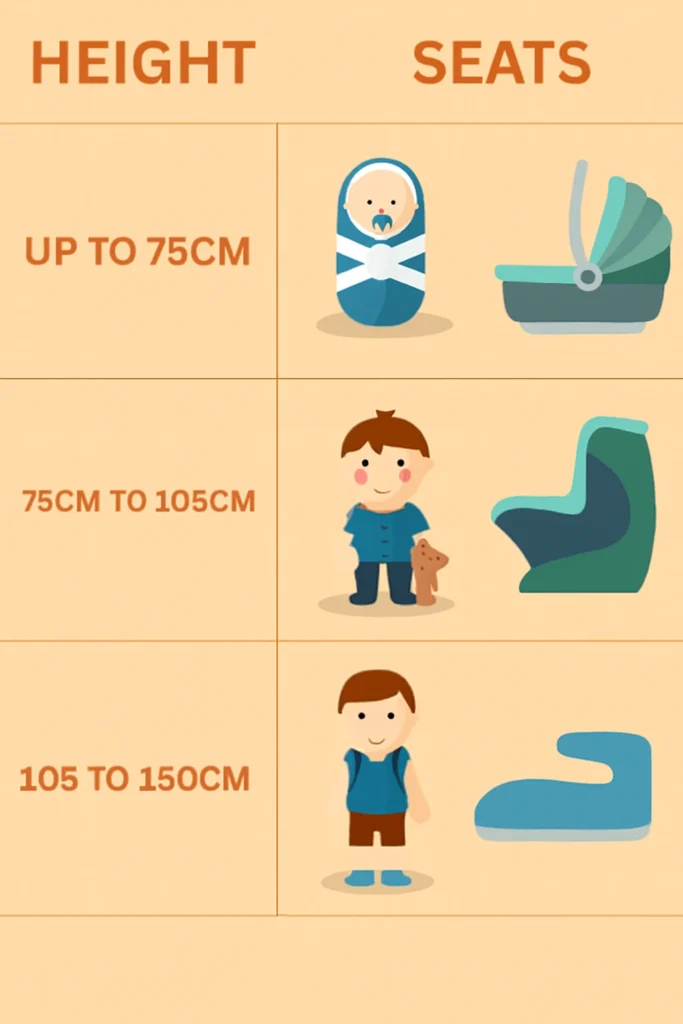
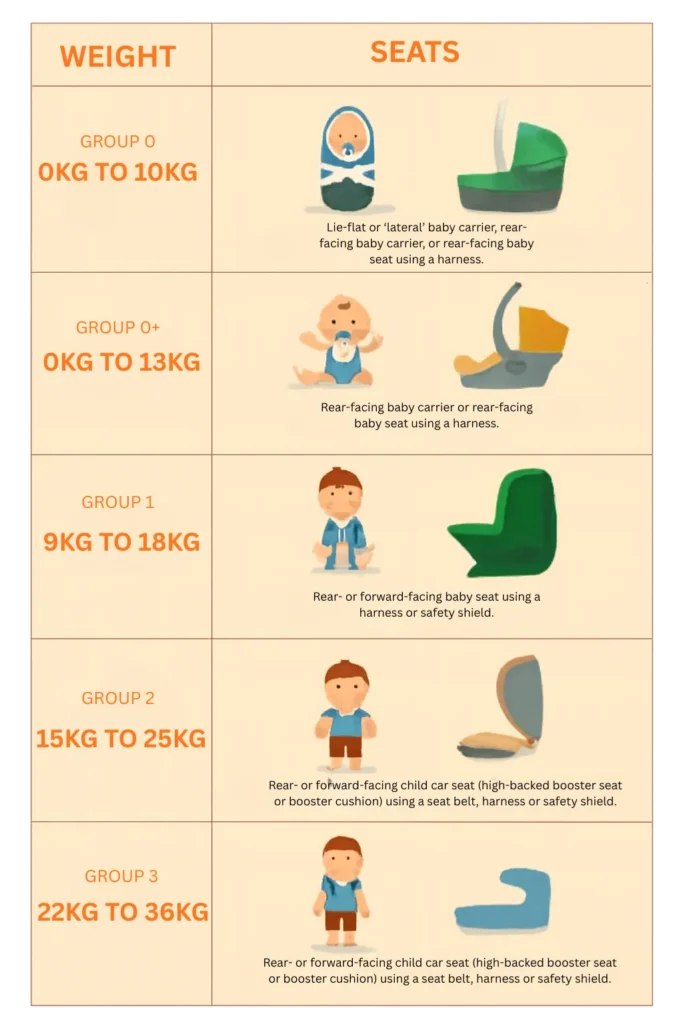
Children must normally use an appropriate child car seat until they are 12 years old or 135 centimetres tall, whichever happens first. After that, they must use a seat belt.
Height-based seats should display the approved R129 mark. Weight-based seats may display an ECE R44 approval mark. The seat must be suitable for the child and compatible with the vehicle. You can check the current requirements through the GOV.UK child car seat rules.
A child seat may have internal damage after a collision even when it appears normal. Road Safety Scotland recommends replacing a child safety seat as soon as possible after a collision and checking whether the insurer will cover the cost. See their child in car safety guidance.
The reasonable cost of replacing a damaged child car seat can be included in your claim for financial losses.
What Is the Motor Insurers’ Bureau and How Does It Help?
The Motor Insurers’ Bureau is a not-for-profit organisation funded by UK motor insurers. It can compensate qualifying people injured by:
- Uninsured drivers
- Untraced or hit-and-run drivers
- Certain foreign registered vehicles
- Vehicle-related acts of terrorism
The MIB acts as an insurer of last resort under agreements with the UK Government. Drivers, passengers, pedestrians, cyclists and property owners may be eligible to submit a claim.
We manage the legal strategy, assess the evidence and work alongside a specialist solicitor experienced in the MIB framework. This is important because an MIB claim does not always follow the same process as a conventional insurer claim.
What to Remember Before Making an MIB Claim
Act quickly and collect as much information as possible. A registration number is extremely helpful, but an untraced claim may still be considered when the vehicle or driver cannot be identified.
You should:
- Report a hit-and-run accident to the police promptly
- Obtain a police reference number
- Record all available vehicle details
- Preserve CCTV and dashcam footage
- Keep witness information
- Obtain medical treatment
- Retain proof of property damage and financial losses
- Check the relevant MIB deadline
MIB’s current guidance states that personal injury claims generally need to be received within three years. Property damage claims generally have a five-year period in Scotland. Different conditions and exclusions may apply, so each claim requires individual assessment.
DEDICATED CLAIMS ADVISORS
Our dedicated claims advisors are always available to offer free legal advice.
100% NO WIN NO FEE CLAIMS
All our claims are processed on a No Win No Fee basis; you pay nothing if you lose.
MILLIONS SECURED IN DAMAGES
To date, we have secured millions in damages.
THOUSANDS OF SATISFIED CLIENTS
To date, we have helped thousands of clients recover compensation and continue to do so.
Why Choose HD Claims for Your Car Accident Claim?
HD Claims makes navigating personal injury claims in Scotland clearer and more manageable. We understand that a claim is not only about legal paperwork. It is also about treatment, financial stability, rehabilitation and rebuilding your life.
Our role is to manage the legal strategy from start to finish. We work alongside a team of specialist personal injury solicitors best suited to your case and ensure your representation reflects the accident, injuries and support you need.
When you work with HD Claims, you receive:
- A free initial claim assessment
- Clear explanations without unnecessary legal jargon
- A legal strategy tailored to your circumstances
- Support gathering medical and financial evidence
- Direct management of insurer communication
- Regular progress updates
- Access to suitable medical and rehabilitation support
- No Win No Fee options for eligible claims
- Preparation for court where fair settlement cannot be achieved
Where to Find Detailed Information on Car Accident Claims
You can find further guidance in the following HDClaims resources:
Common Questions About Car Accident Claims
Can Pedestrians Make a Road Accident Compensation Claim?
Yes. A pedestrian injured because of a driver’s negligence may claim for solatium and associated financial losses. Liability still needs to be established using evidence such as CCTV, witness statements, road layout and police records.
Can I Claim as a Cyclist?
Yes. Cyclists have the same right to pursue compensation when another road user causes an injury. A claim may include bicycle damage, equipment, treatment, lost earnings and future care.
How Do I Claim for a Motorbike Accident?
Obtain medical treatment, report the accident, photograph the scene and preserve witness or camera evidence. Contact HD Claims so we can assess liability and manage the legal strategy with a suitable motorcycle accident solicitor.
Can I Claim as a Passenger?
Yes. A passenger may claim against the driver of their vehicle, the driver of another vehicle or multiple responsible parties. It does not matter if the responsible driver was a friend or family member because the relevant insurer normally handles the claim.
Can I Choose My Own Solicitor Instead of an Insurance-Appointed Solicitor?
You are not always required to use the solicitor suggested by your motor insurer. Your right to choose may depend on the terms of any legal expenses insurance and whether proceedings have started. Obtain independent guidance before accepting representation.
Where Should a Scottish Car Accident Claim Be Handled?
An accident that occurred in Scotland will normally be governed by Scots law, although jurisdiction can depend on the parties and circumstances. A solicitor experienced in Scottish personal injury procedure can determine the correct court and legal route.
Can I Claim on Behalf of a Child or Family Member?
A parent or suitable representative may be able to act for a child under 16. Different arrangements may apply where an adult cannot manage their own legal affairs. Any conflict of interest must be identified before the claim proceeds.
Should I Accept the First Settlement Offer?
Do not accept an offer until you understand your medical prognosis and the full value of your financial losses. Once a settlement is accepted, you will normally be unable to reopen the claim for additional compensation if your symptoms continue or your expenses increase.
What Information Will Be Needed?
Useful information includes medical records, police details, photographs, witness information, insurance correspondence, wage evidence, treatment receipts, repair invoices and a record of how the injury has affected daily life.
Will My Case Go to Court?
Most road traffic claims are resolved through negotiation. Court proceedings may be required when liability is denied, contributory negligence is disputed, or the insurer does not offer appropriate compensation. We manage the legal strategy throughout and ensure you understand each stage.
Contact HD Claims for Road Traffic Accident Legal Advice
If you have been injured in a road traffic accident in Scotland, early guidance can help preserve evidence, identify the correct defender and protect the claim from the three-year time bar.
Contact HD Claims for a free, no-obligation assessment. Call 0141 280 1112 or complete our online enquiry form.
Disclaimer: This page provides general information about Scottish road traffic accident claims. It is not a substitute for legal advice based on your individual circumstances.
Meet The Team

Maisie MacLeod
Senior Claims Manager

Ella Campbell
Head of Serious Injury

Freya Douglas
Long-Term Illness Specialist
We’re Here To Help When You Need Us Most.
Call us on 0141 2801112, or leave us a message below to request a call back and one of our team will be in touch as soon as we can.