HD claims logo without B (2)
0%
Loading ...

No Win No Fee Solicitors Glasgow

element

As Featured In:

circle-element

Check Out Our Awesome Reviews Below:

If you were injured because another person or organisation acted negligently, we can assess and manage your claim without asking you to pay solicitors’ fees upfront. Our no win no fee support in Glasgow allows eligible claimants to pursue compensation on a no win no fee basis, with the funding terms and possible deductions explained before work begins.

At HD Claims, we manage the legal strategy of your claim from start to finish. We work alongside specialist personal injury solicitors suited to your injuries and circumstances.

We're Here To Help

Contact Us Today

We oversee the process, keep you informed and help coordinate the evidence needed for your Scottish compensation claim. This gives you time to focus on treatment, rehabilitation and getting your life back on track.

how-to-make-a-claim

How Does “No Win No Fee” Work Under Scottish Law?

A Scottish no win no fee arrangement means that the solicitor’s fee depends on the outcome of your case. If the case is unsuccessful, the solicitor does not charge that fee; your written terms will explain how insurance and case expenses will be handled.

A no win no fee agreement in Scotland may take the form of a Speculative Fee Agreement or a Damages-Based Agreement. Both fall within the wider legal definition of a success fee agreement under the Civil Litigation (Expenses and Group Proceedings) (Scotland) Act 2018.

Under a Speculative Fee Agreement, the solicitor charges a success fee if the case succeeds. This may be calculated as an uplift on their standard fee. Under a Damages-Based Agreement, the success fee is calculated as an agreed percentage of the compensation recovered.

In Scotland, your funding documents may refer to a Speculative Fee Agreement or Damages-Based Agreement rather than a Conditional Fee Agreement.

Your Scottish agreement will identify the exact funding arrangement and explain:

  • What counts as a successful outcome
  • The percentage or method used to calculate the success fee
  • Whether VAT is included
  • How outlays and insurance premiums are funded
  • What happens if you reject legal advice or end the agreement
  • Whether the same funding terms apply if either side appeals the court’s decision


Our no win no fee service is available across Scotland, including Glasgow and the wider Strathclyde area. We will review the proposed funding arrangement with you before any papers are signed.

Road Traffic Accidents

We have personal injury solicitors to help you with you road traffic accident compensation claims.

Medical Negligence

Contact our expert medical negligence personal injury lawyers in Scotland.

Accidents at Work

With a large network of personal injury solicitors in Scotland we have helped numerous work accident cases.

Trip & Slip Accidents

Our personal injury lawyers are ever ready to help you out with slip trip injury accidents.

Speak to our compensation experts

It doesn't cost you anything to know where you stand.

Fill out the form, and we'll get back to you within one hour.

Need to speak to us sooner?

Call us on 0141 280 1112

Request a FREE call

Terms and conditions

Are Success Fees Capped in Scotland? Understanding the 2018 Act

Yes. Success fees in Scottish personal injury cases are subject to legal caps, although the maximum permitted rate is not automatically the rate you will pay.

Under the Civil Litigation (Expenses and Group Proceedings) (Scotland) Act 2018 and the related 2020 regulations, the maximum personal injury success fees are:

Compensation tierMaximum success feeMaximum deduction within tier
First £100,00020%Up to £20,000
Next £400,000, from £100,001 to £500,00010%Up to £40,000
Any amount above £500,0002.50%Depends on the amount above £500,000

These rates apply progressively. For example, if £600,000 of your compensation is included in the success fee calculation.

The Maximum Fee Would Be:

  • £20,000 on the first £100,000
  • £40,000 on the next £400,000
  • £2,500 on the remaining £100,000
  • Total maximum success fee: £62,500


The statutory caps include VAT. They are maximum limits rather than standard charges, so the percentage stated in your agreement may be lower.

The cap is a ceiling rather than a standard charge. Your actual percentage may be lower and must be stated in your agreement.

A success fee is deducted only when your claim is successful. Before you accept a settlement, you should receive a breakdown showing the compensation recovered, success fee, insurance premium and any other agreed deductions.

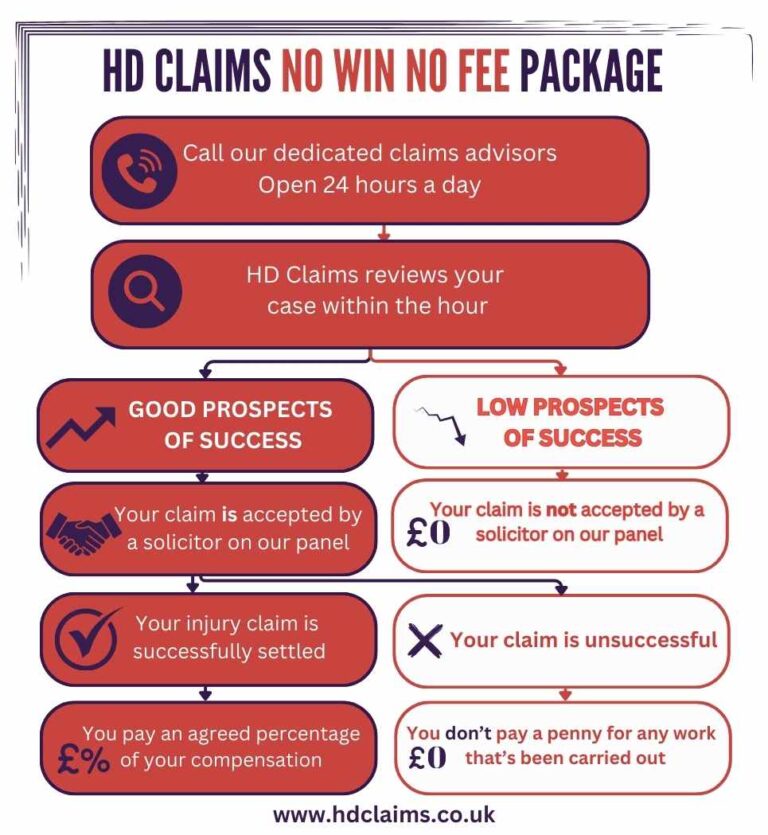
HD CLAIMS NO WIN NO FEE SCOTLAND PACKAGE
Satisfied Clients
0 K+
Dedicated Experts
0 +
Client Rating
0
Compensation Recovered
£ 0 + Million

Are There Any Hidden Costs or Upfront Legal Fees?

No. We operate with complete fee transparency and zero upfront costs.

Under a no win no fee arrangement, legal fees are only payable if your claim is successful. Before work begins, we explain the complete funding structure and provide a written schedule of all potential deductions, including success fees (capped by Scottish law) and After the Event (ATE) insurance premiums, so you know exactly what to expect.

Personal injury cases can involve outlays. These are payments made to other organisations or professionals while evidence is being gathered.

Including:

  • Medical report fees
  • Court dues
  • Fees for accident reconstruction or engineering evidence
  • Charges for specialist records
  • Sheriff officer fees for serving court documents


Under Section 6 of the Civil Litigation (Expenses and Group Proceedings) (Scotland) Act 2018, the provider of a personal injury success fee agreement is responsible for funding these required outlays. Under Scottish law, these expenses cannot be charged separately to you or deducted on top of your capped success fee.

After the Event insurance may protect you against specified outlays and an opponent’s court expenses. The premium is often deferred until the case finishes and may be payable only after a successful result, depending on the policy.

We will also check whether you already have Before the Event legal expenses cover through your home insurance, car or other vehicle insurance, bank account package or trade union membership. Existing cover may help with legal costs, although the policy may contain conditions concerning your choice of solicitor.

Qualified One-way Costs Shifting, known as QOCS, gives personal injury claimants further protection from an opponent’s expenses during Scottish court proceedings. That protection can be removed where a claimant acts fraudulently, behaves in a manifestly unreasonable way or abuses the court process under section 8 of the 2018 Act.

No win no fee funding is separate from legal aid and is not based on the same financial eligibility test. Before signing, ask for a worked example showing what you would receive after every possible deduction.

Anyone seeking wider information about legal services can also consult public resources provided by the Law Society of Scotland.

Personal Injury Claims We Handle Across Glasgow and Strathclyde

We manage claims arising from road collisions, workplace accidents and injuries in shops or public spaces. We can also support serious injury, industrial disease and medical negligence claims across Scotland.

Official court data shows the range of claims pursued throughout the country. In 2024/25, Scottish courts recorded 11,129 personal injury cases, including 7,570 road traffic cases, 1,453 work-related cases and 514 slip, trip or fall cases.

These figures cover cases registered in Scottish courts and do not include claims resolved before court proceedings.

To establish liability under the Scots law of delict, the evidence must generally show that another party owed you a duty of care, breached that duty and caused an injury and damage. We assess these points before recommending the next step.

Accidents at Work in Glasgow Factories, Warehouses and Sites

You can pursue a workplace injury claim while remaining employed. A claim does not automatically end your employment, and compensation is normally dealt with through the employer’s liability insurer.

It is illegal for an employer to penalise, discipline, or fire you for raising genuine health and safety concerns. Under UK employment law, protection against safety-related detriment and automatic unfair dismissal applies from day one of your employment, meaning no minimum length of service is required. If your employer retaliates after an accident or safety report, seek urgent employment advice alongside your personal injury claim.

Glasgow workplace claims can arise in construction sites, Hillington and Queenslie industrial estates, warehouses, shipyards and city-centre hospitality venues. Common causes include faulty equipment, inadequate training, missing protective equipment and falls from height.

According to the Health and Safety Executive, an annual average of around 40,000 workers sustained non-fatal workplace injuries between 2022/23 and 2024/25.

Employers must take reasonable steps to keep workers safe. Training records, equipment checks, accident reports and witness accounts can help show what went wrong.

After an accident, report it promptly and check that the accident book entry is accurate. Keep photographs, names of witnesses, wage records and copies of messages concerning the accident.

You can learn more about making an accident at work claim in Scotland. We can assess employer liability confidentially and explain how the claim may affect your position at work.

Glasgow Road Traffic Accidents: Car, Bus and Cycle Claims

Road traffic claims can involve drivers, passengers, bus users, motorcyclists, cyclists and pedestrians. We also handle claims involving uninsured or untraced drivers through the Motor Insurers’ Bureau.

According to provisional Transport Scotland figures, Glasgow City recorded 738 road casualties in 2025, the highest number reported by any Scottish local authority. These statistics cover injury collisions and casualties reported to Police Scotland.

Collisions occur throughout the city, including on the M8 approaches, the Kingston Bridge, the M74 and busy central junctions. The location can affect which CCTV systems, police records and road-layout evidence need to be obtained.

After a Glasgow Road Collision:

  • Move to safety and call emergency services when necessary.
  • Exchange names, addresses, registration numbers and insurance details.
  • Photograph the vehicles, road position, road signs and visible injuries.
  • Record witness details and preserve dashcam footage.
  • Report the collision to the police when legally required and obtain a reference number.
  • Inform your insurer without admitting liability.
  • Seek medical attention and describe every symptom accurately.


Scottish law allows compensation to be reduced for contributory negligence. If you were partly responsible, such as by failing to wear a seatbelt or making an unsafe manoeuvre, you may still get compensation, but the amount can be reduced to reflect your share of responsibility.

Do not accept an early insurer offer before the medical evidence is complete. Symptoms such as whiplash, concussion and psychological injury may develop or continue after the first examination.

We manage personal injury claims arising from road traffic accidents. Contact us promptly if you need to begin a no win no fee accident claim in Glasgow.

Slips, Trips and Falls in Glasgow City Centre and Public Spaces

Responsibility for a fall depends on who controlled the location and what caused the accident. A broken pavement may involve Glasgow City Council, while a wet supermarket floor or damaged shopping-centre surface may involve the business or property occupier.

Private occupiers must take reasonable care for people entering their premises under the Occupiers’ Liability (Scotland) Act 1960. For example, a shop may be liable if staff knew about a spill, failed to clean it within a reasonable period and provided no warning.

Glasgow City Council has a duty to manage and maintain the public roads and pavements for which it is responsible under the Roads (Scotland) Act 1984. The presence of a pothole or raised paving stone alone does not guarantee compensation; the evidence must show a dangerous defect and a failure to take reasonable maintenance or inspection steps.

If You Fall Near St Enoch Centre, Buchanan Galleries Or Another Busy Location:

  • Photograph the obstacle or defect before it changes
  • Include a ruler, coin or other scale where possible
  • Record the exact location and nearby landmarks
  • Report the accident and request a copy of the report
  • Obtain witness names and contact details
  • Keep damaged footwear and clothing
  • Seek medical attention
  • Note nearby council, shop or transport CCTV cameras


CCTV can be overwritten within days or weeks. We can identify the likely data controller and request preservation of relevant footage before it disappears.


Making A Personal Injury Claim In Scotland

Our panel of experienced personal injury lawyers excel in handling cases against well-funded insurance companies.

Our specialised injury lawyers will assist you with your claim, keep you informed throughout the whole process, and provide you with legal advice that is easy to understand.

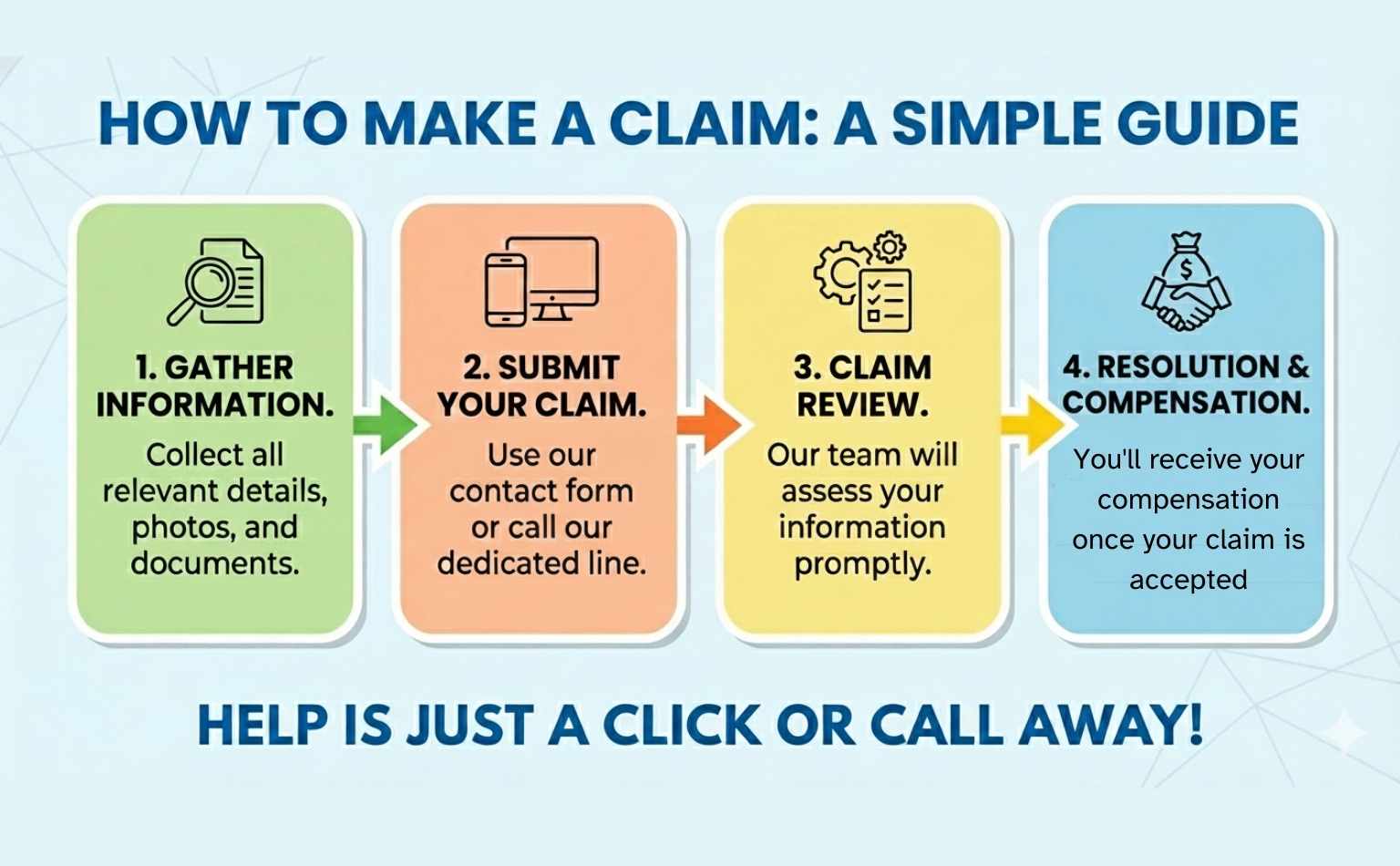
01

Get In Touch.

Tell us your story, we're here to listen and provide you with an initial assessment based on your circumstances.

02

We’ll Prepare Your Claim.

We'll be by your side to take care of the legal process. We'll keep you informed of every step of the way.

03

Receive Compensation.

If your claim is successful, we'll ensure that you get your compensation as soon as possible.

efthymios-xylangouras

"A Student’s Journey from Trauma to Triumph: Efthymios’s Fight for Justice After a Devastating Car Accident"

When Efthymios was injured in a car accident, he was left with severe facial injuries. He didn’t know how he would manage his recovery and studies.

“When I got in contact with HD Legal, they made me feel supported. They were incredibly understanding and fought hard for me, ensuring I received the compensation I deserved.”

Read Efthymios’s story >

margaret-forbes

"Cracked Pavement, Broken Ankle: How HD Legal Helped Margaret Find Justice and Peace of Mind"

When Margaret tripped on a neglected crack in the pavement in Glasgow, she shattered her ankle and was forced to take months off work, unsure how she would manage.

“HD Legal were a lifeline for me. They took care of everything—from gathering crucial evidence to battling the council—and gave me the peace of mind I needed to focus on my recovery.”

Read Margaret’s story >

douglas-macgregor

"Blown Away: HD Legal Fights for Douglas After Faulty Washing Machine Explosion"

When Douglas’s new washing machine exploded, it caused a fire that damaged his kitchen and left him with painful burns.

“HD Legal fought relentlessly for me when it seemed like no one else would. They were thorough, professional, and supported me every step of the way, helping me recover both physically and financially.”

Read Douglas’s story >

smiling-women

"From Misdiagnosis to Recovery: How HD Legal Fought for Eilidh’s Justice and Secured the Care She Needed"

When Eilidh’s severe abdominal pain was repeatedly misdiagnosed, her condition worsened, leading to the need for urgent surgery.

“HD Legal stood by me when I felt lost. They were thorough, professional, and fought tirelessly to get me the care and compensation I needed to heal.”

Read Eilidh’s story >

smiling-man

"Falling from Heights, Rising with Justice: How HD Legal Secured Compensation for Alistair After a Workplace Accident Involving Faulty Scaffolding"

Alistair Campbell’s fall from faulty scaffolding left him with serious injuries and months of recovery.

“HD Legal’s panel of solicitors fought for me, ensuring I received the support needed to move forward.”

Read Alistair’s story >

The Scottish Personal Injury Claims Process: Step by Step

The claims process usually follows these stages:

  1. Free initial assessment and funding review.
  2. Gathering accident and financial evidence.
  3. Independent medical assessment.
  4. Formal notification of the responsible party.
  5. Liability and compensation negotiations.
  6. Settlement or court proceedings where required.


Your no win no fee claim starts with a confidential assessment. We’ll ask about the accident, your injuries and when it took place to see whether you may have a claim and whether any deadline is close.

First, we look at what happened and how the injury has changed your day-to-day life. Photos, CCTV and witness accounts can show how the accident happened, while wage slips and receipts help us work out what it has cost you.

If needed, we arrange an appointment with an independent medical expert. They will examine your injuries, review your recovery and identify any further treatment you may need.

Once we have enough information, we’ll contact the person or business thought to be responsible, or their insurer. Some claims follow the Scottish pre-action protocol, giving both sides time to share information and try to agree a settlement without going to court.

Once sufficient evidence is available, the parties enter the negotiation phase. Your solicitor will assess each offer against the medical evidence, financial losses, Scottish judicial precedent and any future care or employment needs.

We will not accept an offer without your authority. If settlement is recommended, you receive advice on its value and a breakdown of the expected deductions.

Where liability or valuation cannot be agreed, the solicitor may recommend litigation.

What Is the Three-Year Time Limit for Making a Claim in Scotland?

Most Scottish personal injury actions must be raised in court within three years of the accident or the claimant’s later date of knowledge.

The Prescription and Limitation (Scotland) Act 1973 sets this general personal injury time limit. Sending an insurer a letter or starting negotiations does not always stop the time bar; court proceedings usually need to be raised before the deadline.

The date of knowledge may apply where you did not immediately know that you had suffered a significant injury or that another party’s act or omission caused it. This often requires careful analysis in industrial disease and delayed-diagnosis cases.

For a child injured before turning 16, the standard three-year period normally starts on their 16th birthday. A parent or guardian can pursue the claim earlier.

Different rules and exceptions can apply to fatal claims, incapacity and historic abuse. Under section 19A, Scottish courts may allow certain late claims, but this is never guaranteed. If you believe the three-year deadline has passed, seek legal advice as soon as possible.

Contact us well before the possible deadline. Early action also protects CCTV footage, witness recollection and business records.

Will My Claim Go to Glasgow Sheriff Court or ASPIC?

Many claims settle through negotiation without a final court hearing. Even when court proceedings are raised to protect the time limit or resolve a dispute, the claim may still settle before a final hearing.

A Glasgow case may be raised at Glasgow Sheriff Court at 1 Carlton Place. Another option is the All-Scotland Sheriff Personal Injury Court, also known as the National Personal Injury Court, in Edinburgh.

The appropriate court depends on jurisdiction, claim value, complexity and the type of accident. A high-value or legally complex case may also be considered for the Court of Session.

Going to court does not always mean you will have to speak at a full trial. If you need to attend and answer questions, the solicitor will help you prepare, explain what to expect and discuss any support available.

We handle correspondence, procedural deadlines and negotiations on your behalf. You remain involved in decisions about offers, evidence and whether litigation should continue.

DEDICATED CLAIMS ADVISORS

Our dedicated claims advisors are always available to offer free legal advice.

100% NO WIN NO FEE CLAIMS

All our claims are processed on a No Win No Fee basis; you pay nothing if you lose.

appear-logo-in-mobile

MILLIONS SECURED IN DAMAGES

To date, we have secured millions in damages.

THOUSANDS OF SATISFIED CLIENTS

To date, we have helped thousands of clients recover compensation and continue to do so.

Why Choose us in Glasgow?

Our role is to manage the legal strategy of your claim from the first assessment to the final outcome. We will work alongside a specialist personal injury solicitor suited to your accident, injuries and likely court route.

Our Service Includes:

  • A free initial case assessment
  • A written explanation of fees and financial risk
  • A dedicated point of contact
  • Evidence gathering tailored to your accident
  • Coordination with medical experts and rehabilitation providers
  • Regular updates at key stages
  • Clear advice before any settlement decision


We have a physical Glasgow presence at Clyde Offices, 2nd Floor, 48 West George Street, Glasgow, G2 1BP. You can also contact our Glasgow team on 0141 280 1112.

FAQs

How Much Compensation Will I Receive Under Scottish Guidelines?

The value depends on the injury, recovery period and financial impact. Two people with similar diagnoses may receive different amounts because their symptoms, treatment and employment damages are different.

Scottish compensation commonly includes:

  • Solatium for pain, suffering and loss of amenity
  • Past and future loss of earnings
  • Treatment and rehabilitation expenses
  • Care and assistance provided by others
  • Travel and medication costs
  • Pension loss or reduced earning capacity
  • Damaged property and other reasonable expenses


Scottish courts commonly refer to the Judicial College Guidelines when valuing solatium. The guidelines provide starting ranges; courts also consider medical evidence and relevant Scottish judicial decisions.

For example, a wrist injury claim may include solatium alongside lost wages, physiotherapy costs and help provided at home. A serious spinal injury may require additional calculations for future care, accommodation, equipment and lifelong loss of earnings.

Online compensation calculators can offer a broad estimate, but they rarely account for the full patrimonial loss. We can provide a more useful valuation after reviewing your medical evidence and financial records.

Yes, you can usually change solicitors if you are dissatisfied with delays, poor communication or the advice you have received. Obtain a confidential second opinion before ending the existing arrangement.

The new solicitor will normally ask you to provide written permission for your current firm to transfer the legal file. They will then review any offers, expenses and approaching deadlines. The previous firm may require outstanding costs to be resolved before releasing the file, depending on its terms of business.

If you are comparing no win no fee lawyers in Glasgow, ask each provider to explain how the transfer affects the existing success fee, outlays and insurance cover. Do not cancel your current agreement until the new solicitor has confirmed that the case can be accepted.

We can review the current position and oversee the handover if a transfer is appropriate. This includes checking whether the claim has stalled, whether the evidence is complete and whether an offer reflects the documented financial losses.

Start Your Free Consultation with Our Glasgow Team Today

Start by telling us when the accident happened, where it occurred and how you were injured. Include any medical treatment, photographs, witness details or communication from an insurer.

There is no charge for the initial assessment. If the claim is accepted, you will receive the funding terms and potential deductions in writing before deciding whether to proceed.

Contact Our Glasgow Team Through Any Of These Options:

We’re Here To Help When You Need Us Most.

Call us on 0141 2801112, or leave us a message below to request a call back and one of our team will be in touch as soon as we can.

Terms and conditions